
Background Checks & Document Checks for Canadian Gig Drivers: Navigating Delays and Rejections
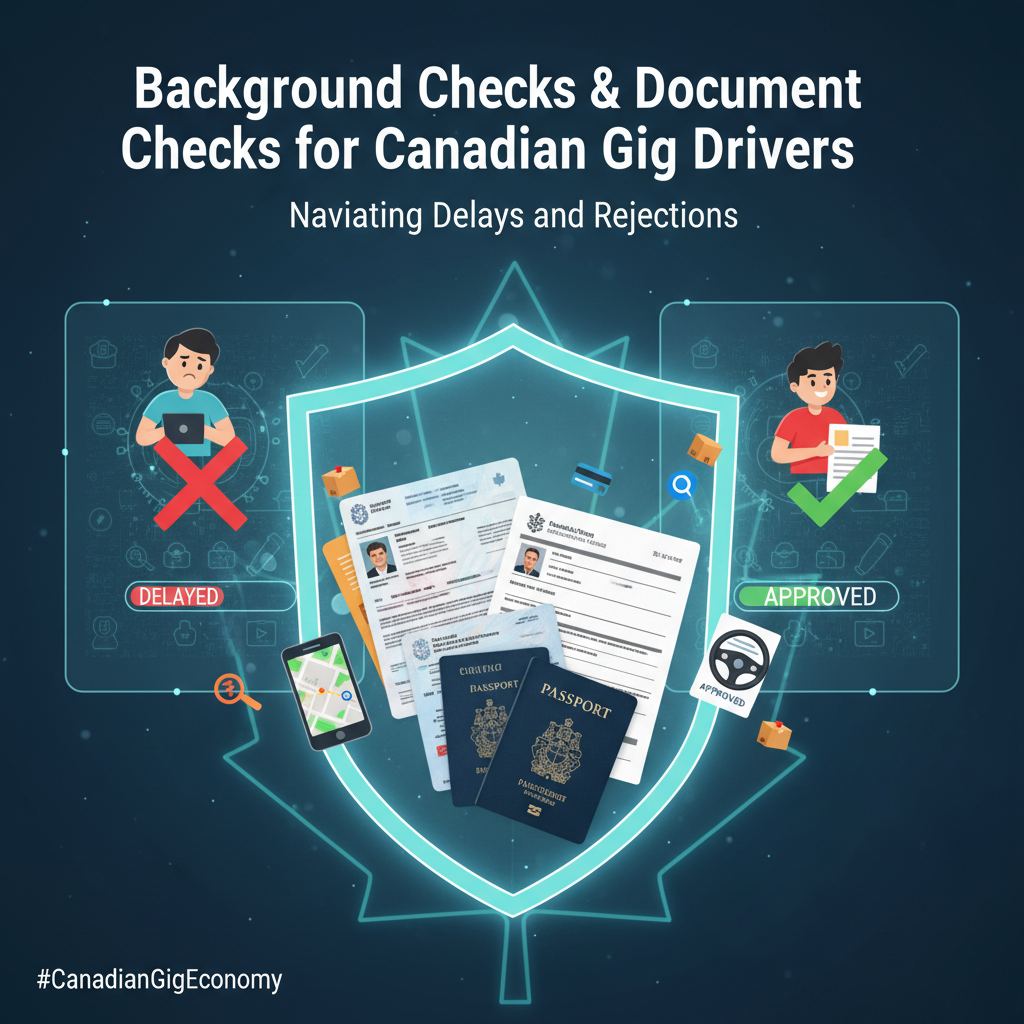
The Canadian gig economy, characterized by its flexible work arrangements and independent contractor model, relies heavily on digital platforms for connecting service providers with consumers. From ride-sharing and food delivery to courier services, a significant workforce contributes to this sector. For individuals aspiring to join this dynamic workforce, the registration process often includes a critical and sometimes daunting hurdle: comprehensive background checks & document checks for Canadian gig drivers. These checks are fundamental for platform operators to ensure the safety of their users, comply with regulatory requirements, and maintain trust within their ecosystems. However, for many prospective gig drivers, this phase can be fraught with delays, unexpected rejections, and a lack of clear guidance, leading to frustration and lost income opportunities. This article aims to demystify the background check process for Canadian gig drivers, detailing what information is scrutinized, how to proactively obtain necessary documentation like driver’s abstracts from various provincial authorities, and crucial strategies for resolving delays or disputes with third-party background check providers. By understanding these mechanisms, drivers can better prepare, anticipate challenges, and navigate the registration journey with greater confidence and efficiency.
I. What Shows Up on Background Checks for Gig Drivers
Gig economy platforms typically conduct a multi-faceted evaluation of prospective drivers, encompassing their driving history, criminal record, and the validity of their vehicle and insurance documentation. The scope and depth of these checks are primarily driven by safety considerations, legal obligations, and the specific services offered by the platform.
A. Driving Records and Abstracts
A driver’s abstract, also known as a driver’s record, is an official document issued by the provincial or territorial motor vehicle authority that summarizes an individual’s driving history. Gig platforms generally require these to assess a driver’s adherence to traffic laws and their overall risk profile.
-
What is it? A driver’s abstract typically includes information such as:
- Demerit Points: Accumulated for various traffic infractions. While demerit points themselves don’t directly lead to suspensions, accumulating too many can trigger a review or suspension of the driver’s license. The number of points and the threshold for action vary by province. For instance, in Ontario, a fully licensed driver accumulating 15 points will have their license suspended for 30 days.
- Traffic Convictions: Records of offenses like speeding, reckless driving, failing to stop, or distracted driving. The severity and recency of these convictions are critical factors. Minor infractions might be tolerated, while serious or numerous convictions within a specified period (e.g., 3-5 years) can lead to disqualification. For example, a single conviction for driving over 50 km/h over the speed limit is often an immediate disqualifier.
- Accidents/Collisions: Details of incidents where the driver was deemed at fault or involved. Repeated at-fault accidents signal a higher risk to both the platform and its insurance providers. The abstract may indicate whether the accident resulted in charges or convictions.
- License Suspensions: Any periods during which the driver’s license was revoked or suspended due to unpaid fines, medical reasons, or severe traffic offenses (e.g., impaired driving). A history of suspensions is a major red flag for gig platforms, as it indicates a past inability or unwillingness to comply with driving regulations.
- Endorsements/Conditions: Any special conditions on the license (e.g., corrective lenses, automatic transmission only) or specific endorsements (e.g., for operating certain types of vehicles). While usually not disqualifying, they must be observed, and platforms need to know if a driver’s abilities are restricted.
-
Why is it important for gig work? Gig platforms, especially those involving the transportation of passengers (ride-sharing) or valuable goods (delivery), have a vested interest in ensuring their drivers are safe and responsible. A clean driving record reduces insurance risks, enhances customer safety, and protects the platform’s reputation. Most platforms specify a look-back period, often 3 to 5 years, for assessing a driver’s abstract. Serious infractions like impaired driving, hit-and-run, or dangerous driving within this window are almost universally disqualifying. Even multiple minor infractions can indicate a pattern of risky behavior that platforms seek to avoid. Some platforms may also have policies around specific types of convictions, such as those related to aggressive driving or driving without insurance, leading to rejection.
B. Criminal Record Checks
Criminal record checks are another cornerstone of the gig driver application process, designed to assess a candidate’s criminal history and potential risk to the public. These checks are typically conducted through third-party services that interface with police databases.
-
What is it? Depending on the platform and provincial requirements, different levels of criminal record checks may be performed:
- Criminal Record Check (CRC): This is the most basic check, disclosing adult criminal convictions for which a record suspension (formerly a pardon) has not been granted. It typically searches the RCMP’s Canadian Police Information Centre (CPIC) database for convictions. This check is primarily focused on disclosable findings of guilt.
- Criminal Record and Judicial Matters Check (CRJMC): This check includes the results of a CRC and also searches for findings of guilt under the Youth Criminal Justice Act within the applicable disclosure period, outstanding warrants, charges, and judicial orders (e.g., peace bonds, probation orders). This provides a more current and comprehensive view of an individual’s involvement with the justice system.
- Vulnerable Sector Check (VSC): This is the most comprehensive check, required for positions of trust or authority over vulnerable persons (children, the elderly, persons with disabilities). In addition to the CRJMC information, it checks for a record suspension (pardon) related to a sexual offence. While not all gig roles require a VSC, ride-sharing services, especially those that may transport unaccompanied minors or individuals needing assistance, might. Some provinces, like Ontario, mandate VSCs for ride-sharing drivers. The process for a VSC is more rigorous and often requires an in-person visit to a police station for identity verification and sometimes fingerprinting.
-
What typically disqualifies a driver? Gig platforms have strict policies regarding criminal convictions. Generally, offenses involving violence, sexual assault, theft, fraud, terrorism, or serious drug offenses are immediate disqualifiers. Even less severe offenses might lead to rejection if they are recent or indicate a pattern of behaviour that conflicts with the trust required for the role. Impaired driving convictions, while often appearing on a driving abstract, can also be a significant factor in criminal record checks due to their severity. The look-back period for criminal record checks can also vary, but serious offenses may lead to permanent disqualification regardless of how long ago they occurred. Platforms are particularly sensitive to any offenses that could directly impact the safety and security of passengers or the goods being delivered.
-
Pardons and Disclosures: In Canada, individuals can apply for a record suspension (formerly known as a pardon) for past criminal convictions. If granted, these records are sealed and should not be disclosed on standard criminal record checks. However, for a Vulnerable Sector Check, pardoned sexual offenses may still be disclosed under specific circumstances, particularly if there is a concern about potential harm to vulnerable individuals. This is a unique aspect of the VSC designed to protect the most vulnerable members of society.
C. Other Checks and Documents
Beyond driving and criminal records, gig platforms also require verification of other critical documents:
- Vehicle Information: Proof of vehicle ownership or registration, valid license plates, and details about the vehicle’s make, model, and year. Most platforms have age restrictions on vehicles (e.g., vehicles must be less than 10-15 years old) and may have requirements regarding vehicle type (e.g., 4-door sedans for ride-sharing).
- Vehicle Inspection: Many platforms, especially ride-sharing services, require regular safety inspections of the vehicle to ensure it meets provincial standards and is roadworthy. This often involves a certified mechanic completing a safety certificate, which must be updated periodically (e.g., annually).
- Insurance: Proof of valid vehicle insurance is paramount. For gig work involving passengers or commercial deliveries, standard personal auto insurance is usually insufficient. Drivers are often required to have specific commercial or ride-sharing insurance policies that provide adequate coverage for these activities. This is a critical requirement for passenger safety, liability, and compliance with provincial transportation regulations. Platforms often verify this directly with insurance providers.
- Personal Identification: Government-issued photo ID (e.g., provincial driver’s license, passport, provincial ID card) is required to verify the applicant’s identity and ensure it matches the background check results.
- Work Eligibility: Proof of legal eligibility to work in Canada (e.g., Canadian citizenship, permanent residency, valid work permit) is a standard requirement for any employment or independent contractor arrangement. This ensures compliance with Canadian immigration and labour laws.

II. Obtaining Your Driver’s Abstract: A Provincial Guide
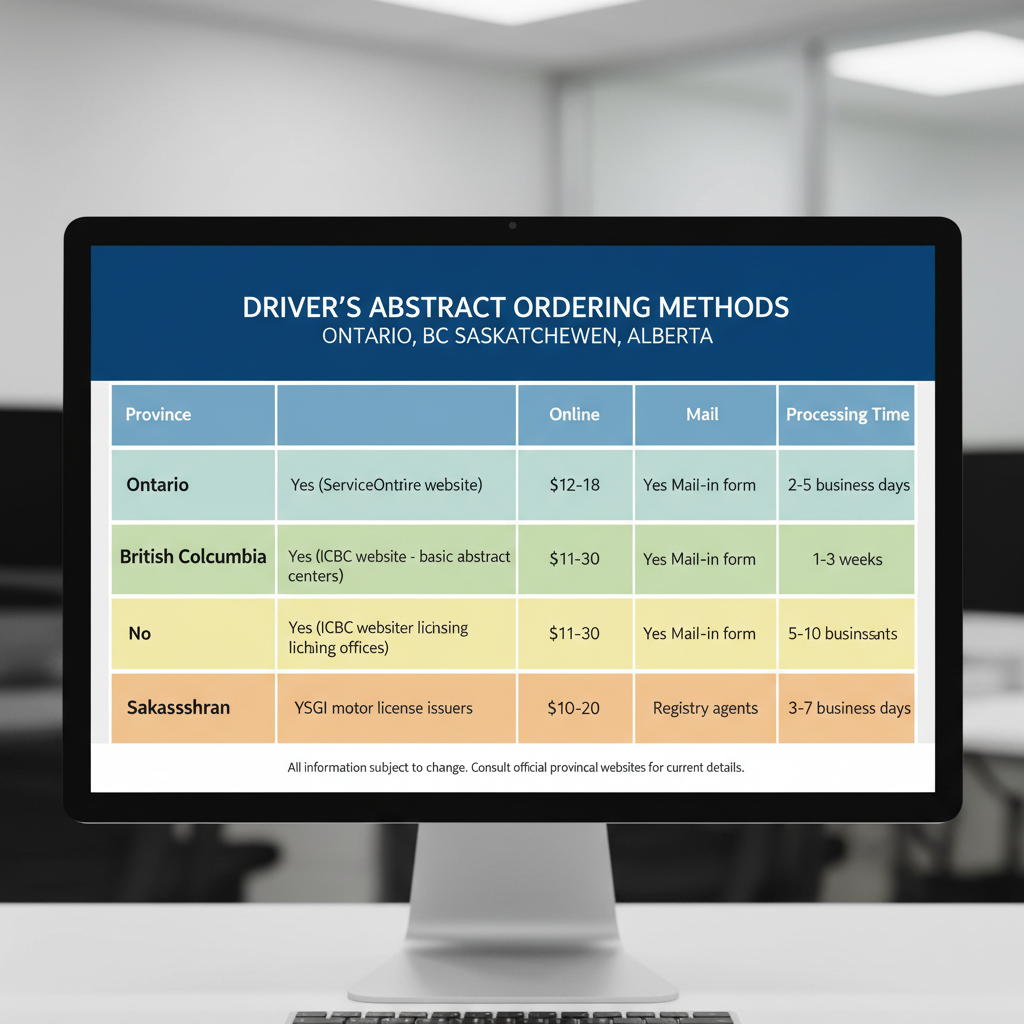
The process for obtaining a driver’s abstract varies significantly by province. While the core information remains consistent, the methods of application, fees, and processing times differ. Below are detailed instructions for ordering a 3-year or 5-year Driver’s Abstract from the primary provincial authorities in Ontario, British Columbia, Saskatchewan, and Alberta.
A. Ontario (Ministry of Transportation – MTO)
In Ontario, driver records are managed by the Ministry of Transportation (MTO). Gig drivers typically require a “Driver’s Abstract” or “Certified Driver’s Record.” The 3-year and 5-year versions are commonly requested, especially for those pursuing a PTC license in Ontario.
-
Types of Abstracts:
- 3-Year Driver’s Record (Uncertified): Shows driver’s license status, demerit point history, Highway Traffic Act convictions (e.g., speeding tickets), and any license suspensions for the past three years. This is the most commonly requested abstract for employment.
- 5-Year Driver’s Record (Uncertified): Similar to the 3-year abstract but covers a longer period.
- Certified Driver’s Record: A more comprehensive record often used for legal proceedings, showing detailed conviction history. Gig companies rarely require this level, as it’s more expensive and generally unnecessary for their purposes.
-
How to Order:
- Online (Fastest):
- Visit the official ServiceOntario website to get a driver’s record.
- Navigate to the “Driver and Vehicle” section and look for “Driver’s Abstract” or “Order a driver record.”
- You will need your Ontario driver’s license number, the expiry date of your license, and your date of birth.
- A valid credit card (Visa, MasterCard, American Express) is required for payment.
- The abstract is usually available for immediate download as a PDF document. Ensure you save and print it.
- Fee: Approximately $12 for an uncertified 3-year or 5-year abstract.
- Processing Time: Immediate download.
- By Mail:
- Download and complete the “Application for Driver’s Abstract” form from the ServiceOntario website.
- Include a cheque or money order payable to “Minister of Finance.”
- Mail the completed form and payment to the address provided on the form (usually ServiceOntario, Driver and Vehicle Licence Issuing Office, P.O. Box 9200, Kingston, ON, K7L 5K4).
- Fee: Approximately $12.
- Processing Time: Can take 2-3 weeks for delivery.
- In Person:
- Visit any ServiceOntario centre.
- You will need to present your valid Ontario driver’s license and pay the fee.
- The abstract can often be printed on the spot.
- Fee: Approximately $12.
- Processing Time: Immediate.
- Online (Fastest):
-
Important Notes: Ensure the abstract is recent, as some platforms require it to be issued within the last 30-90 days. Always verify the specific requirements with the gig platform you are applying to.
B. British Columbia (Insurance Corporation of British Columbia – ICBC)
In British Columbia, driving records are managed by the Insurance Corporation of British Columbia (ICBC). Gig drivers typically need a “Driving Record” or “Driver’s Abstract.” For detailed requirements specific to driving rideshare in BC, consult our guide on Driving Rideshare BC: Class 4 License & ICBC Requirements.
-
Types of Records:
- Driver Factor Report: This is the most common report requested for employment purposes. It shows an applicant’s driving history, including convictions, prohibitions, and crashes for a specific period (typically 5 years). It determines a driver’s insurance risk premium and is often sufficient for gig platforms.
- Driving Record (Abstract): Can be more detailed, showing all entries on your driving record. It may be required for specific commercial licensing or legal matters, but the Driver Factor Report is usually what gig companies request.
-
How to Order:
- Online (Fastest for Driver Factor Report):
- Visit the ICBC website.
- Look for “Order your driving record” or “Request your Driver Factor Report.”
- You will need your BC driver’s license number and your Personal Access Code (PAC), which is a unique 4-digit number mailed to you with your driver’s license. If you don’t have it, you can request it from ICBC, which may take a few days.
- The Driver Factor Report can usually be downloaded instantly.
- Fee: Free for a Driver Factor Report. Other detailed reports may have a fee.
- Processing Time: Immediate download.
- By Mail or Fax:
- Download and complete the “Application for Driving Record” (MV100) form from the ICBC website.
- Include a photocopy of your valid BC driver’s license or two pieces of valid ID.
- Mail or fax the completed form and identification to the address/fax number provided on the form (ICBC, Driver Licensing, Box 3750, Victoria, BC V8W 3Y5).
- Fee: Free for a Driver Factor Report, other records may incur a fee.
- Processing Time: Can take 5-10 business days by mail.
- In Person:
- Visit any ICBC driver licensing office.
- Present your valid BC driver’s license.
- You can usually obtain your Driver Factor Report or driving record on the spot.
- Fee: Free.
- Processing Time: Immediate.
- Online (Fastest for Driver Factor Report):
-
Important Notes: Ensure you are requesting the correct type of report (e.g., Driver Factor Report) as specified by the gig platform. The PAC is crucial for online access, so keep it secure.
C. Saskatchewan (Saskatchewan Government Insurance – SGI)
In Saskatchewan, driver records are managed by Saskatchewan Government Insurance (SGI). Gig drivers will typically need a “Driver’s Abstract.”
-
Types of Abstracts: SGI provides a standard “Driver’s Abstract” which includes information about your driving history, convictions, demerit points, and suspensions for a specified period.
-
How to Order:
- Online (Limited Scope):
- SGI’s MySGI online service allows you to view some of your driver information, but often a formal abstract needs to be requested for official purposes.
- It is generally recommended to use other methods for an official abstract for employment, as the online view might not meet the strict requirements of gig platforms.
- Through an Authorized Issuer (Recommended):
- SGI works with a network of motor licence issuers throughout the province. These are typically local businesses that provide SGI services.
- Locate an SGI motor licence issuer near you (check the SGI website for a list).
- Visit in person with your valid Saskatchewan driver’s license and pay the fee.
- They can typically print the official Driver’s Abstract on the spot.
- Fee: Approximately $15-$20.
- Processing Time: Immediate.
- By Mail or Fax:
- Download and complete the “Request for Driver’s Abstract” form from the SGI website.
- Include a photocopy of your valid Saskatchewan driver’s license or two pieces of ID.
- Include payment (cheque or money order) for the fee.
- Mail or fax the completed form and payment/ID to the address/fax number provided on the form (SGI, Driver Licensing & Vehicle Registration, 2260 11th Avenue, Regina, SK S4P 0J9).
- Fee: Approximately $15-$20.
- Processing Time: Can take 2-3 weeks.
- Online (Limited Scope):
-
Important Notes: Verify the specific abstract requirements (e.g., 3-year or 5-year, if applicable) with the gig platform. The most reliable and quickest method is usually through an authorized issuer.
D. Alberta (Alberta Registries)
In Alberta, driver’s abstracts are issued by Alberta Registries, specifically through authorized registry agents across the province.
-
Types of Abstracts:
- 3-Year Driver’s Abstract: Summarizes your driving record for the last three years, including demerit points, convictions, and suspensions. This is the most common type requested for employment.
- 5-Year Driver’s Abstract: Covers a longer period of five years.
- 10-Year Driver’s Abstract: Less commonly requested for gig work but provides a more extensive history.
- Commercial Driver Abstract: For drivers with a commercial license, which may show additional information pertinent to commercial driving.
-
How to Order:
- In Person at a Registry Agent (Recommended and Fastest):
- This is the primary method for obtaining a driver’s abstract in Alberta.
- Locate an authorized Alberta Registry Agent office near you (use the Alberta government website to find a list).
- You must present valid government-issued photo identification (e.g., Alberta driver’s license, passport).
- You will need to confirm your identity and sign a request form.
- Fee: Approximately $15-$25, depending on the registry agent.
- Processing Time: Immediate. The abstract is printed on the spot.
- By Mail (if unable to visit in person):
- If you are outside Alberta or physically unable to visit a registry agent, you can apply by mail.
- You will need to complete a “Driver Abstract Statement of Acknowledgement” form.
- Have the form witnessed by a Notary Public or Commissioner for Oaths.
- Include a legible photocopy of your valid photo identification.
- Send the form, ID copy, and payment (cheque or money order) to an Alberta registry agent that processes mail-in requests. You should contact a specific registry agent first to confirm their process and fee, as not all agents offer this service or may have specific requirements.
- Fee: Approximately $15-$25, plus potential notary fees and postage.
- Processing Time: Can take several weeks depending on mail service and the registry agent’s processing times.
- In Person at a Registry Agent (Recommended and Fastest):
-
Important Notes: Alberta does not offer an online portal for downloading driver’s abstracts directly, making in-person visits to a registry agent the most efficient method. Always confirm the specific look-back period (3-year or 5-year) required by the gig platform.
III. Navigating Criminal Record Checks
Criminal record checks are usually initiated by the gig platform through a third-party background check provider. While drivers don’t directly “order” these in the same way as abstracts, understanding the process and potential issues is vital.
-
How they are conducted:
- Third-Party Providers: Companies like Sterling Backcheck, Checkr, Triton, or others partner with gig platforms to conduct these checks. These providers specialize in screening and compliance services.
- Driver Consent and Information: The driver provides their explicit consent and personal information (full name, date of birth, addresses for the past 5-7 years, any previous names used, etc.) directly to the provider via an online portal. This consent is a legal requirement under Canadian privacy laws.
- Police Databases: The third-party provider then submits queries to relevant police databases, primarily the RCMP’s CPIC (Canadian Police Information Centre) system, and may also check local police records if required by the specific check type (e.g., vulnerable sector). The process involves cross-referencing the provided personal information with official police records.
- Identity Verification: Robust identity verification is crucial. This may involve uploading copies of government-issued ID (e.g., driver’s license, passport), answering security questions, or even in-person verification or digital biometrics in some cases, especially for Vulnerable Sector Checks.
-
What affects the outcome:
- Convictions: As mentioned, convictions for serious offenses are typically disqualifying. The type, severity, and recency of the conviction are all weighed against the platform’s safety policies.
- Outstanding Charges/Warrants: If there are active charges or warrants, the check will be flagged, leading to delays or rejections until these are resolved. An ongoing legal matter generally makes an applicant ineligible until it’s concluded.
- Discrepancies: Minor discrepancies in personal information (e.g., a maiden name not listed, a previous address omitted, a typo in a date) can cause delays as the provider tries to verify the information. These require manual intervention and clarification.
- Name Similarities: If your name is similar to someone else with a criminal record, this can lead to a “hit” that requires further investigation. This often means manual review by an analyst to determine if the record truly belongs to you or is a “false positive,” causing significant delays. This is particularly common with common names.
-
Preparing for the Check:
- Accuracy: Ensure all information you provide to the third-party provider is 100% accurate and consistent with your official documents. Double-check spelling, dates, and addresses.
- Completeness: Do not omit any previous addresses or names (including maiden names, previous married names, or any legally changed names), even if they seem insignificant or from a long time ago. An incomplete address history can trigger delays because the provider cannot fully verify past residences.
- Awareness: If you have a past conviction (even minor), understand that it might appear on the check depending on its nature and age. While some minor, very old offenses might not disqualify you, it’s best to be aware of your own record. If you have any doubts, consider obtaining a personal criminal record check before applying to understand what might appear.
IV. Resolving Delays and Rejections with Third-Party Background Check Providers
Delays and outright rejections during the background check phase are common pain points for gig drivers. Understanding the reasons behind these issues and knowing how to effectively resolve them can significantly reduce stress and expedite the registration process.
A. Common Reasons for Delays
- Incomplete or Discrepant Information: The most frequent cause. If the information you provide (name, date of birth, addresses, previous names) doesn’t perfectly match official records or is incomplete, the provider must spend time verifying or requesting corrections. For example, omitting a middle name or a former address can halt the process.
- “Potential Hit” or Name Similarity: If your name, or a combination of your name and date of birth, matches someone with a criminal record, the system will flag it as a “potential hit.” This requires manual review, often by a human analyst, to confirm whether the record belongs to you or is a false positive. This process is time-consuming and often requires additional steps like fingerprinting.
- Complex Record History: If your driving or criminal record has multiple entries, even if they are minor, it can take longer for the provider to compile and interpret the full history. Each entry might need individual verification.
- High Volume of Applications: During peak application periods (e.g., summer months, holidays), background check providers can experience backlogs, leading to general delays across all applications.
- Jurisdictional Complexity: If you have lived in multiple provinces or territories, or even different countries, conducting a thorough check can take longer as information needs to be retrieved from various jurisdictions, each with its own response times and processes.
- Technical Glitches: System errors, API failures between the provider and police databases, or other technical issues can temporarily halt or delay the processing of checks.
- Unresponsive Agencies: Sometimes, the delay is due to the police force or motor vehicle authority in a specific region being slow to respond to information requests from the background check provider. This is outside the control of both the applicant and the provider.
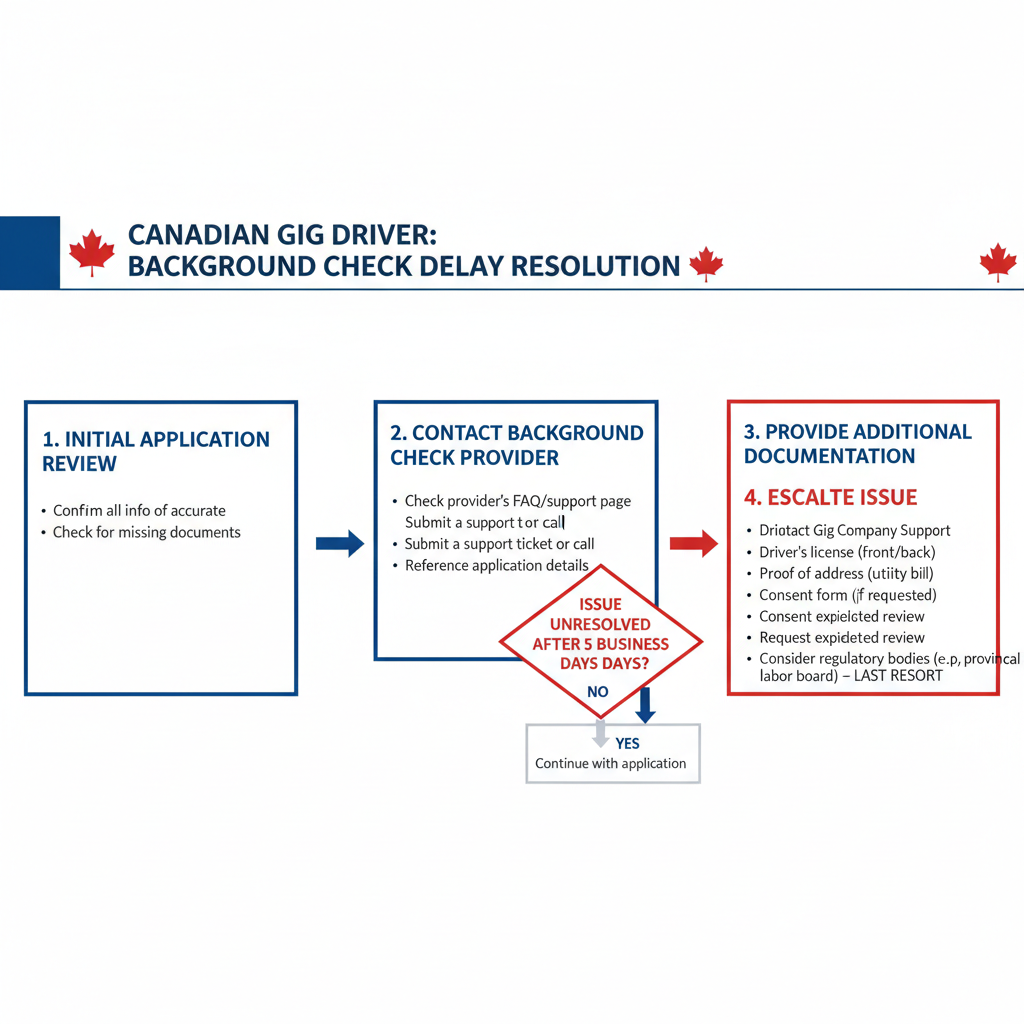
B. Steps to Take When Facing Delays
-
Review Your Application Immediately:
- As soon as you suspect a delay (e.g., the check takes longer than the stated timeframe of a few business days), log back into the third-party provider’s portal (e.g., Sterling Backcheck, Checkr, Triton) or the gig platform’s application dashboard.
- Carefully review all the information you submitted. Look for typos, missing middle names, incorrect dates (especially birth dates or dates of residence), or omitted previous addresses. Any error, no matter how small, can cause a holdup.
- If you find a mistake, correct it within the system if possible, or make a note of it for your communication with their support team.
-
Contact the Third-Party Background Check Provider Directly:
- This is the most critical step. Do not solely rely on the gig platform; the third-party provider is handling the actual check.
- Find Contact Information: Look for a “Contact Us,” “Support,” or “Help” section on the provider’s website. They usually have a dedicated applicant support line or email.
- Prepare Your Information: Have your application ID or reference number, your full name, date of birth, and any other relevant personal details ready.
- Be Specific: Clearly state that you are an applicant for [Gig Platform Name] and that your background check for application ID [ID Number] is delayed. Ask for the specific reason for the delay. Do they need more information? Is it a “potential hit”?
- Document Everything: Keep a log of all communications: dates, times, names of representatives you spoke with, what was discussed, and any reference numbers provided. This is vital if you need to escalate the issue later.
-
Provide Additional Documentation (If Requested):
- The provider might ask for additional documents to verify your identity or resolve discrepancies. This could include:
- Additional forms of ID (e.g., utility bills for proof of address).
- Proof of address (e.g., recent utility bill or bank statement matching your current residence).
- Court documents related to a minor past infraction (if applicable) to clarify details.
- A letter of explanation for any discrepancies or unusual items on your record.
- Submit these documents promptly and precisely as requested, using their secure portal if available, or encrypted email.
- The provider might ask for additional documents to verify your identity or resolve discrepancies. This could include:
-
Understand the “Potential Hit” Resolution Process:
- If the delay is due to a “potential hit” from a name similarity, the provider will likely require you to undergo a manual review. This might involve submitting fingerprints to a local police service or additional identity verification.
- Cooperate fully and quickly with these requests. While inconvenient and sometimes requiring a fee for fingerprinting, it’s necessary to prove your identity and distinguish your record from another. These processes can add several weeks to the overall timeline.
-
Communicate with the Gig Company (Strategically):
- While the third-party provider is your primary contact for the details of the check, keep the gig company informed.
- Initial Contact: After contacting the background check provider, send a polite email to the gig platform’s driver support explaining that you are actively working with their background check partner to resolve a delay and that you will keep them updated.
- Escalation: If you are making no headway with the third-party provider after multiple attempts and adequate time has passed (e.g., over a week since your last communication without resolution), you can ask the gig platform if they have a dedicated liaison or internal contact person for background check issues. Sometimes, their internal team can expedite communication or flag your application with the provider, as they have direct relationships.
- Avoid Over-Contacting: Don’t harass either party. Be persistent but patient, following up logically if you don’t hear back within the promised timeframe or after a week of no progress.
C. Strategies for Rejections
If your application is ultimately rejected due to the background check, it’s crucial to understand your rights and options.
-
Request Specific Reasons for Rejection:
- Under Canadian privacy legislation (e.g., PIPEDA), you have the right to know why your application was rejected, particularly if it’s based on information from a background check.
- Request a copy of the background check report from the third-party provider. This report will detail any information that led to the rejection.
- The gig platform should also provide you with the specific reasons they disqualified you based on the report and their internal policies.
-
Review the Report for Errors:
- Carefully examine the background check report for any inaccuracies, errors, or information that does not pertain to you. False positives, outdated information, or records belonging to someone with a similar name can occur.
- If you find errors, gather evidence to dispute them (e.g., official court documents proving a case was dismissed, identity documents to prove mistaken identity).
-
Dispute Inaccurate Information with the Third-Party Provider:
- If the report contains incorrect information, you have the right to dispute it directly with the background check provider.
- They have a legal obligation to investigate and correct any inaccuracies. Provide all supporting documentation. This process can take time but is essential, as a corrected report might lead to reconsideration by the gig platform.
-
Address Disqualifying Information (If Accurate):
- If the information on your record is accurate and led to disqualification, consider if there are any mitigating circumstances or if the platform’s policy allows for an appeal.
- For example, if a minor traffic infraction from several years ago was the issue, and you have a clean record since, you might be able to appeal with a letter of explanation outlining your improved driving habits and commitment to safety.
- For criminal record issues, consult with a legal professional to understand if there are options like record suspensions (pardons) that could eventually clear your record, though this is a long-term solution and not an immediate fix for an application.
-
Understand the Platform’s Re-application Policy:
- Some platforms have a waiting period (e.g., 3-6 months or even a year) before you can re-apply after a rejection. Inquire about this policy.
- If the issue was a correctable document error or an easily resolved discrepancy, you might be able to re-apply sooner once the error is officially resolved and confirmed by the background check provider.
D. Your Rights Regarding Background Checks
In Canada, your personal information is protected under various privacy laws, primarily the Personal Information Protection and Electronic Documents Act (PIPEDA) at the federal level, and similar provincial legislation (e.g., British Columbia’s PIPA, Alberta’s PIPA, Quebec’s Act respecting the protection of personal information in the private sector).
- Consent: Your explicit consent is required before any background check can be conducted. The platform and provider must clearly explain what information will be collected and why.
- Access: You have the right to access the personal information held about you by organizations, including background check providers, and to challenge its accuracy and completeness.
- Correction: You have the right to request the correction of inaccurate or incomplete information. Organizations must amend their records if you demonstrate an inaccuracy.
- Limited Collection and Use: Organizations can only collect information that is necessary for the stated purpose, and they can only use it for those purposes. For gig work, this means information directly relevant to your ability to perform the job safely and reliably.
- Security: Your personal information must be protected by appropriate security safeguards against loss, theft, unauthorized access, disclosure, copying, use, or modification.
If you believe your rights have been violated, or if a background check provider is unresponsive or uncooperative in correcting errors, you can file a complaint with the Office of the Privacy Commissioner of Canada (OPC) regarding your privacy rights or the relevant provincial privacy commissioner. These bodies investigate complaints and can order organizations to comply with privacy laws.

Leave a Reply