
Driving Rideshare in British Columbia: Class 4 License & Board Requirements
The advent of ridesharing services has transformed urban transportation across the globe, offering convenient and flexible options for both passengers and drivers. In British Columbia, a province renowned for its breathtaking landscapes and vibrant cities like Vancouver, Victoria, and the Okanagan region, the rideshare industry operates under a unique and stringent regulatory framework. Unlike many other jurisdictions where a standard Class 5 (or equivalent) driver’s license might suffice, BC mandates a specialized Class 4 license for all rideshare operators. This requirement underscores the province’s commitment to passenger safety, driver professionalism, and a highly regulated transportation ecosystem. Aspiring rideshare drivers in BC must navigate a comprehensive process that includes obtaining this specialized license, undergoing rigorous testing, and securing specific commercial insurance coverage through the Insurance Corporation of British Columbia (ICBC). Understanding these multifaceted requirements is paramount for anyone considering a career in BC’s dynamic rideshare sector. For a general overview of multi-app driving, explore our guide on Driving for Uber & Lyft in Canada: Registration & Multi-App Guide.
The regulatory environment for ridesharing in British Columbia is overseen primarily by the Registrar of Passenger Transportation, under the provincial Passenger Transportation Act. This legislation establishes the framework for passenger-directed vehicles, which includes taxis, limousines, and rideshare services. The emphasis on robust regulation stems from several factors: ensuring fair competition within the existing taxi industry, protecting consumers, and maintaining high safety standards for all commercial passenger transportation. For drivers contemplating joining the rideshare community in Vancouver’s bustling metropolitan area, Victoria’s charming streets, or the scenic routes of the Okanagan, a deep dive into these requirements is not just advisable, but essential for a successful and compliant operation. Further details on the overarching regulatory environment for ridesharing can be found on the Passenger Transportation Board’s ridesharing information page.
The Mandate for a Class 4 License: Why BC Stands Apart
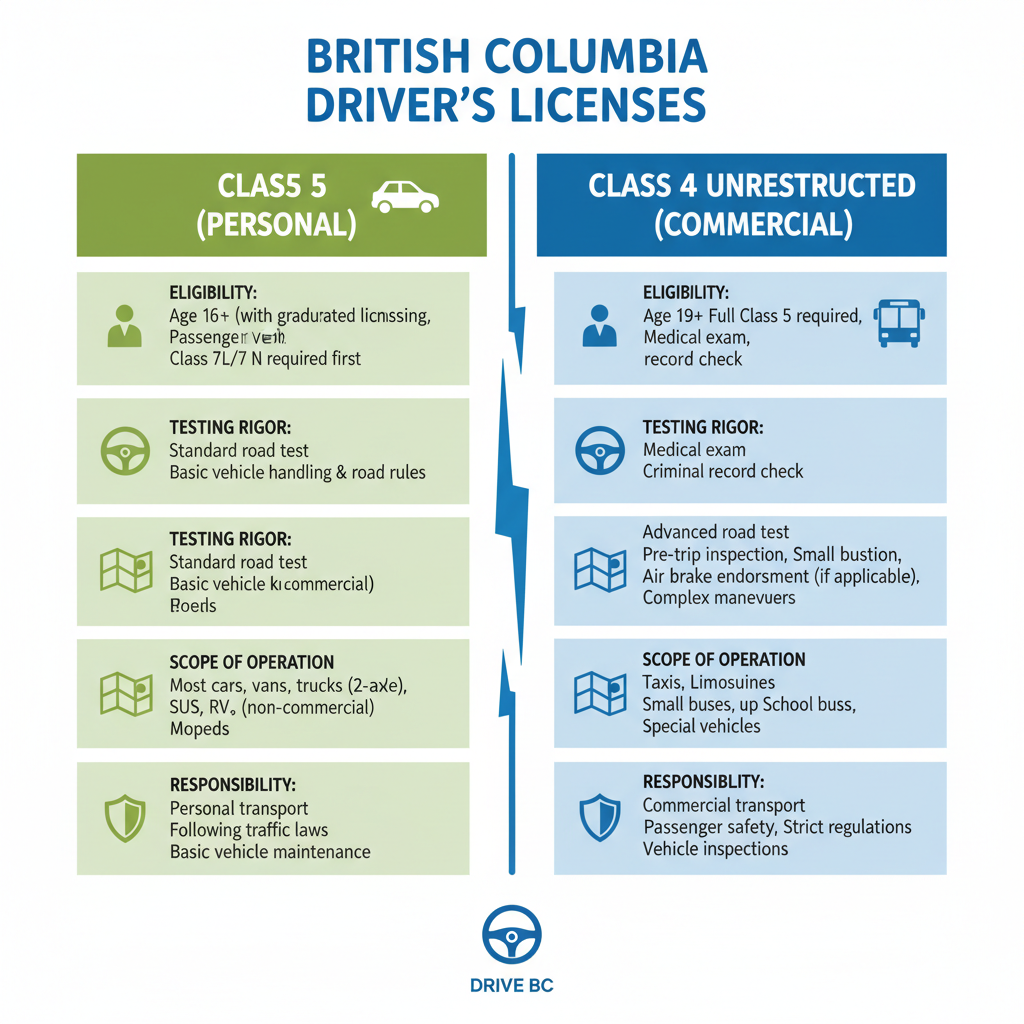
British Columbia’s requirement for a Class 4 driver’s license for rideshare operators sets it apart from many other jurisdictions in North America. This is not merely an administrative hurdle but a foundational element of the province’s commitment to elevating the standards of commercial passenger transportation. The Class 4 license, specifically the Class 4 Unrestricted type, is designed for professional drivers who transport passengers, ensuring they possess a higher level of skill, knowledge, and accountability than that required for a standard personal vehicle license (Class 5). This advanced certification is a clear indicator that BC prioritizes the safety and professionalism of its commercial drivers. This proactive stance significantly influences how rideshare services operate, from the busy downtown core of Vancouver to the scenic routes connecting cities in the Okanagan Valley.
Understanding the Class 4 License Categories
In British Columbia, there are two main types of Class 4 licenses, each with distinct operational scopes, impacting aspiring rideshare drivers:
- Class 4 Unrestricted: This is the essential license for rideshare drivers, taxi drivers, ambulance drivers, and other commercial passenger vehicles seating up to 25 people. It allows drivers to operate vehicles that include vans, small buses, and, critically, rideshare vehicles. The “unrestricted” aspect signifies that the driver is certified to operate vehicles that transport members of the general public for hire, without significant limitations on vehicle type within the class. This broad permission is why it’s the required license for most rideshare platforms operating in BC. Drivers holding this license are recognized as having met a higher bar for professional conduct and driving skill.
- Class 4 Restricted: This license is for drivers operating taxis or limousines with a seating capacity of not more than 10 persons (including the driver), or ambulances, or certain vehicles used for delivering goods by courier. While it is also a commercial license, rideshare services typically fall under the Class 4 Unrestricted category due to the broader scope of their operation and regulatory definition as Transportation Network Services (TNS). Aspiring rideshare drivers should always aim for the Class 4 Unrestricted license to ensure full compliance and avoid any operational restrictions, ensuring they can seamlessly connect with rideshare platforms across BC. More details on different license classes can be found on the ICBC website.
The Rationale Behind BC’s Class 4 Requirement
The decision to mandate a Class 4 license for rideshare drivers is rooted in several critical objectives, all aimed at fostering a safe and reliable passenger transportation system across the province, from the bustling streets of Vancouver to the tranquil routes of the Okanagan:
-
Enhanced Passenger Safety: Transporting passengers for hire carries a significantly higher duty of care than personal driving. Class 4 drivers undergo more rigorous testing, including advanced road skills assessments and a comprehensive medical examination. These evaluations ensure drivers are not only proficient behind the wheel but also physically and mentally fit to safely operate a commercial vehicle for extended periods. This added scrutiny significantly reduces the risk of accidents and ensures passengers are in capable hands, whether they are navigating the complex urban environment of downtown Vancouver or traversing the winding roads of the Okanagan Valley. The training emphasizes hazard perception, defensive driving techniques, and emergency protocols, equipping drivers to handle unforeseen situations with greater competence and responsibility. This commitment to safety is paramount in maintaining public confidence in rideshare services.
-
Professional Standards and Accountability: The Class 4 license signifies a professional standard, elevating the role of a rideshare driver beyond casual employment. It indicates that the driver has not only mastered basic driving skills but also understands the nuances of commercial operation, including superior customer service, efficient route optimization, and strict adherence to specific passenger transportation regulations. This professionalization helps foster a more reliable, courteous, and trustworthy rideshare service, distinguishing it from casual driving and building a reputation for quality transportation. Drivers are expected to maintain these standards consistently, ensuring a high-quality experience for all passengers.
-
Public Trust and Confidence: By setting a high bar for driver qualifications, the provincial government aims to build and maintain public trust in the nascent rideshare industry. Passengers can have greater confidence that their driver has met stringent provincial safety and competency requirements, similar to those imposed on traditional taxi services. This parity helps level the playing field between different modes of passenger-directed transportation and ensures a consistent safety standard across all services. This trust is crucial for the long-term success and acceptance of ridesharing in communities like Victoria and beyond.
-
Comprehensive Driver Assessment: The Class 4 licensing process involves a multi-faceted assessment that goes beyond basic driving ability. It evaluates a driver’s in-depth knowledge of commercial regulations, advanced defensive driving techniques, and their overall suitability for professional driving roles. This holistic approach helps identify and screen out individuals who may pose a higher risk to passengers or other road users, ensuring that only qualified and responsible individuals are permitted to operate commercial passenger vehicles. This thorough vetting process helps safeguard both passengers and the public.
-
Regulatory Harmonization: While ridesharing is a relatively new industry, BC has strategically integrated it into its existing passenger transportation framework. Mandating the Class 4 license ensures that rideshare drivers are subject to similar professional standards as other commercial drivers, such as taxi operators. This approach promotes consistency, reduces regulatory gaps, and ensures that all commercial passenger services operate under a unified safety and quality umbrella, providing clarity and fairness across the transportation sector.
Comparison with Other Jurisdictions
It is worth noting that BC’s approach differs significantly from many other regions globally. In some parts of the United States, for instance, rideshare drivers may only need a standard Class D (or equivalent) personal driver’s license, along with a background check and vehicle inspection. Even within Canada, some provinces might have less stringent requirements regarding driver’s license classes for rideshare operators. British Columbia’s robust Class 4 requirement reflects a more conservative and safety-focused regulatory philosophy, prioritizing passenger welfare and professional conduct above all else. This distinct approach is a key characteristic of British Columbia’s rideshare landscape, impacting drivers in cities like Victoria, who must meet these higher provincial standards to legally operate.
Role of the Passenger Transportation Branch (PTB) and the Registrar
The Registrar of Passenger Transportation, operating under the Passenger Transportation Act, is instrumental in defining and enforcing these requirements. This body ensures that rideshare companies (known as “Transportation Network Services” or TNS in BC) and their drivers comply with provincial regulations, which include driver licensing, vehicle standards, insurance, and fare structures. The Class 4 license is a non-negotiable prerequisite enforced by ICBC, the provincial Crown corporation responsible for driver licensing and vehicle insurance. The Passenger Transportation Board also provides valuable ridesharing information for drivers and companies, offering comprehensive details on the regulatory landscape.
In summary, the Class 4 license requirement in BC is a cornerstone of its passenger transportation policy. It elevates the standard for rideshare drivers, ensuring a safer, more professional, and more accountable service for the public. Aspiring drivers in BC, particularly those targeting the busy rideshare markets of Vancouver, Victoria, and the Okanagan, must fully commit to meeting this rigorous provincial standard.
Navigating the Path to a Class 4 License: Knowledge, Road, and Medical
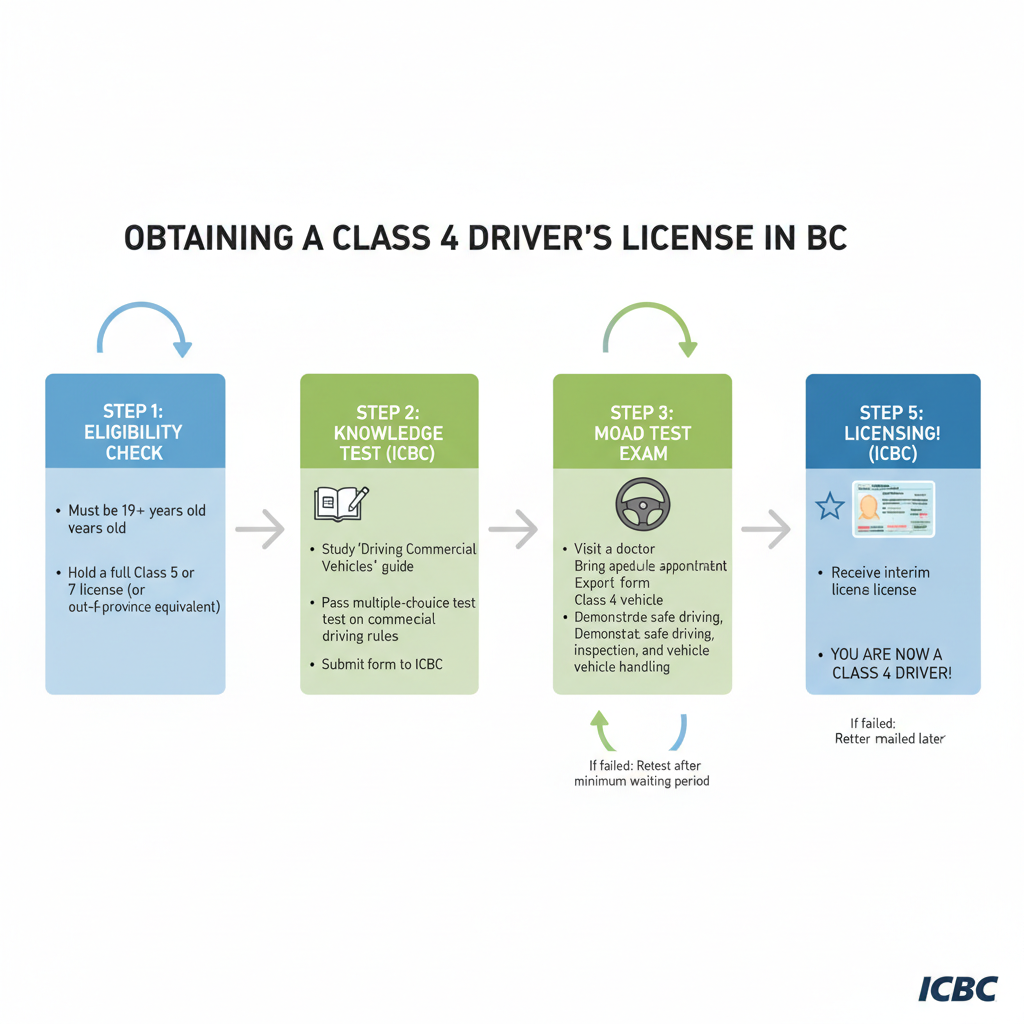
Obtaining a Class 4 Unrestricted driver’s license in British Columbia is a multi-step process that demands thorough preparation and a commitment to meeting rigorous standards. This journey involves passing a knowledge test, undergoing a comprehensive medical examination, and successfully completing a practical road test. Each component is designed to ensure that aspiring rideshare drivers possess the necessary cognitive abilities, physical fitness, and practical skills to safely and professionally transport passengers for hire, whether through the urban sprawl of Vancouver or the tourist routes of the Okanagan.
1. Eligibility Criteria
Before embarking on the Class 4 application process, candidates must meet several fundamental eligibility requirements, which establish a baseline for responsible driving:
- Age: You must be at least 19 years old. This minimum age reflects the increased maturity and responsibility associated with commercial driving and transporting the public.
- Existing License: You must hold a valid, full-privilege BC Class 5 or Class 6 driver’s license (or an equivalent license from another jurisdiction, which would need to be transferred to BC) for at least two years. The two-year requirement ensures you have significant experience as a driver before transitioning to a commercial role. Drivers currently in the graduated licensing program (L or N stage) are not eligible, as the program focuses on developing foundational skills, not commercial operation.
- Driving Record: A clean driving record is crucial. ICBC conducts a comprehensive driving record check. Applicants with excessive penalty points (e.g., more than 6 points in the past two years), recent driving prohibitions, or serious infractions (such as impaired driving convictions) may be deemed ineligible or required to wait for a specified period before applying. Generally, a record free of major offenses and a minimal number of minor infractions is expected, demonstrating a consistent history of safe and lawful driving necessary for passenger transportation.
2. The Knowledge Test
The Class 4 knowledge test assesses your understanding of road rules, traffic signs, and specific regulations pertinent to commercial passenger transportation. This is not merely a rehash of the Class 5 test; it delves deeper into the responsibilities and legalities of driving for hire, emphasizing the unique challenges and duties of a professional driver.
- What it Covers:
- Road Signs and Rules of the Road: A comprehensive understanding beyond basic identification, including situational interpretation and application for commercial vehicles. This includes understanding the impact of vehicle weight and passenger load on braking and handling.
- Safe Driving Practices: Advanced defensive driving techniques, heightened hazard perception, proactive risk management strategies, and techniques for driving in adverse weather conditions often encountered in BC, such as heavy rain, snow, or fog, which are common across Vancouver, Victoria, and mountain passes in the Okanagan.
- Passenger Transportation Regulations: Specific provincial laws governing commercial passenger vehicles in BC, including driver responsibilities towards passengers (e.g., assisting with accessibility, managing disruptive behavior), vehicle maintenance logs, accessibility requirements, and proper handling of passenger incidents (e.g., first aid, reporting procedures). This includes understanding the nuances of the Passenger Transportation Act and its associated regulations, especially concerning passenger rights and safety protocols.
- Commercial Vehicle Operation: Aspects unique to operating a vehicle commercially, such as detailed pre-trip inspections (beyond a basic walk-around), securing loads (even if just passenger luggage), and an awareness of driver fatigue management, even if formal hours of service rules are less stringent for rideshare than for heavy commercial vehicles.
- Emergency Procedures: What precise steps to take in case of an accident, a vehicle breakdown with passengers aboard, or a medical emergency involving passengers, including first aid awareness, communication protocols, and evacuation procedures. This emphasizes a driver’s capability to act responsibly in unforeseen circumstances.
- Preparation Resources:
- The primary and most authoritative resource is the ICBC Driving Commercial Vehicles Manual. This extensive manual contains all the information required for the knowledge test. Aspiring drivers should pay particular attention to sections related to passenger transportation, advanced defensive driving techniques, vehicle inspections for commercial use, and legal responsibilities. It is crucial to study this manual thoroughly.
- ICBC Practice Tests: Online practice tests are invaluable for familiarizing yourself with the format, style, and types of questions you will encounter. They help identify areas where further study is needed and build confidence before the actual test.
- Driver Training Courses: While not mandatory for the knowledge test, commercial driving schools often offer specialized courses that include preparation for the Class 4 knowledge test, providing structured learning, expert guidance, and simulated test environments.
- Booking and Fees: The knowledge test can be booked online through the ICBC website or by calling their customer service line. A fee is associated with taking the test, and separate retake fees apply if you don’t pass on the first attempt. You must present valid identification, such as your current BC driver’s license, at the time of the test.
3. The Medical Examination
A critical component of the Class 4 licensing process is the mandatory medical examination. This ensures that drivers are medically fit to operate a commercial passenger vehicle safely, protecting both themselves and their passengers, and is a recurring requirement throughout a commercial driver’s career.
- Purpose: To assess a driver’s overall physical and mental health for commercial driving. Commercial drivers spend significant time behind the wheel, often under various environmental and emotional stresses; therefore, higher health standards are required to prevent sudden incapacitation or impaired judgment. This assessment is vital for public safety.
- Who Performs It: The medical examination must be completed by a qualified physician registered with the College of Physicians and Surgeons of British Columbia. It cannot be self-assessed or performed by a non-medical professional.
- What it Involves: The examination is comprehensive and typically includes assessments of:
- Vision: Including detailed checks of visual acuity (with or without corrective lenses), peripheral vision, depth perception, and color perception. Standards are more stringent than for a Class 5 license, as excellent vision is paramount for hazard detection, especially at night or in adverse weather.
- Hearing: To ensure the driver can hear sirens, horns, passenger requests, and other important auditory cues necessary for safe operation and communication.
- Cardiovascular Health: Checks for conditions such as heart disease, hypertension, arrhythmias, and other circulatory issues that could impair driving ability, particularly those that might lead to sudden cardiac events or loss of consciousness.
- Neurological Conditions: Screening for epilepsy, sleep disorders (like sleep apnea, which can cause sudden drowsiness and is a common concern for professional drivers), stroke history, and other neurological issues that might lead to sudden incapacitation or affect cognitive function.
- Metabolic Conditions: Particularly diabetes, focusing on its management, stability, and potential for severe hypoglycemia (low blood sugar) which can impair consciousness and reaction time.
- Musculoskeletal System: Assessment of strength, range of motion, and any physical limitations (e.g., severe arthritis, limb impairments) that could affect vehicle control, emergency braking, or the ability to assist passengers, including loading/unloading luggage.
- Mental Health: Evaluation for conditions such as severe anxiety, depression, psychosis, or other psychiatric disorders that could impact judgment, concentration, reaction time, or lead to impulsive behavior while driving. Stability and resilience are important attributes for commercial drivers.
- Medication Review: A thorough discussion of any medications being taken (prescription or over-the-counter) and their potential side effects on driving performance, including drowsiness, dizziness, or impaired coordination. Drivers must inform their physician about all medications.
- Form: Your physician will need to complete a specific ICBC Medical Report Form. It’s essential to ensure the physician completes all sections accurately and thoroughly, as any omissions can delay your application.
- Frequency of Medical Exams: While the initial medical exam is required for licensing, commercial drivers are typically required to undergo periodic medical examinations as they age. For Class 4 drivers, this usually means every five years until age 45, then every three years until age 65, and annually thereafter. However, ICBC may request more frequent exams if there are specific medical concerns identified, or if a driver’s medical condition changes. It is the driver’s responsibility to ensure these follow-up medical reports are submitted to ICBC to maintain their license’s validity.
4. The Road Test
The Class 4 road test is the practical assessment of your driving skills in a commercial context. It’s significantly more demanding than a Class 5 road test, requiring a higher level of precision, observation, hazard anticipation, and defensive driving. This test confirms your readiness to safely operate a vehicle carrying paying passengers across diverse BC road conditions, from the busy streets of Vancouver to the more relaxed environments of the Okanagan.
- Booking Procedures: Once you’ve successfully passed the knowledge test and your medical report has been submitted and approved by ICBC, you can book your Class 4 road test. Appointments can be made online or by phone. Due to demand, especially in major urban centers like Vancouver, it’s advisable to book well in advance.
- Vehicle Requirements: You must provide a vehicle that meets the requirements for a Class 4 test. This typically means a passenger vehicle (a standard car or van) that is safe, in excellent working order, and appropriate for the class of license you are seeking. It must have valid insurance and registration, and all lights, signals, brakes, and tires must be in perfect condition. The vehicle used for the test should resemble the type of vehicle you intend to use for ridesharing (e.g., a sedan or minivan). Any vehicle presented must be clean and free of excessive clutter.
- Test Format: The road test typically lasts for about 45 minutes to an hour and includes several key components:
- Pre-Trip Inspection: The examiner will ask you to demonstrate your knowledge of the vehicle’s components and safety checks. This includes visually inspecting exterior lights (headlights, tail lights, brake lights, turn signals), tires (pressure and tread depth), fluid levels (oil, brake fluid, windshield washer fluid), the functionality of brakes (foot and parking), horn, wipers, mirrors, and ensuring all required emergency equipment (like a first-aid kit or fire extinguisher, if applicable) is present and accessible. This confirms your ability to ensure the vehicle is safe before transporting passengers.
- In-Traffic Driving: You will drive on various roads, including urban streets, highways (where applicable and safe), and residential areas, demonstrating your ability to navigate safely and efficiently under different traffic conditions. This includes handling intersections, roundabouts, lane changes, and merging onto high-speed roads. The examiner will assess your ability to adapt to varying traffic flow and road types.
- Specific Maneuvers: These may include:
- Three-point turns: Demonstrating precise vehicle control in confined spaces, a useful skill in urban areas.
- Parallel parking: Essential for urban ridesharing, requiring accuracy, spatial awareness, and observation of surroundings.
- Backing up: Straight-line backing for a specific distance, emphasizing control, slow speed maneuverability, and constant observation using mirrors and head checks.
- Lane changes: Executing smooth, safe, and well-signaled lane changes, checking all mirrors and blind spots thoroughly.
- Intersection management: Proper lane positioning, thorough observation of all directions (left, right, straight), and precise timing for turns and through movements, prioritizing pedestrian and cyclist safety.
- Observation of Driving Habits: The examiner will rigorously assess your:
- Defensive Driving: Anticipating potential hazards well in advance, maintaining safe following distances in various conditions, and constantly scanning the road ahead and around the vehicle to identify and react to potential risks.
- Passenger Loading/Unloading Safety: While not physically loading passengers, you’ll be assessed on how you would approach and stop safely at a curb, considering passenger access, traffic flow, and potential hazards for boarding/alighting passengers. This includes choosing safe, legal spots to stop.
- Awareness of Surroundings: Constant and effective checking of all mirrors and blind spots (shoulder checks) is crucial, not just occasionally, but as a continuous habit.
- Adherence to Traffic Laws: Strict compliance with speed limits, stop signs (coming to a complete, full stop behind the line), traffic signals, and yielding rules. Minor infractions can lead to immediate failure.
- Smoothness and Control: Gentle acceleration, smooth braking, and precise steering to ensure passenger comfort and prevent jarring movements. This is key for a professional passenger experience.
- Key Skills Assessed: The test places a strong emphasis on hazard perception, accurate decision-making under pressure, and the ability to maintain calm and control in challenging situations. Examiners are looking for consistent safe practices and a proactive approach to driving, not just isolated correct actions. Your ability to communicate effectively with the examiner (e.g., confirming directions) is also observed.
- Tips for Success:
- Practice Extensively: Practice all required maneuvers repeatedly until they are second nature. Drive in varied traffic conditions, including rush hour, and familiarise yourself with the rules in different environments. Consider taking lessons with an experienced Class 4 driving instructor. They can provide targeted feedback.
- Review Manuals: Re-read the ICBC Driving Commercial Vehicles Manual, particularly sections on safe driving practices, pre-trip inspections, and specific commercial vehicle regulations. Understanding the “why” behind the rules will help you apply them practically.
- Familiarize with Test Routes: While not always possible to know the exact route, practicing in the vicinity of the ICBC test centre can help you become familiar with local traffic patterns, speed limits, and challenging intersections.
- Ensure Vehicle is Ready: Present a clean, well-maintained vehicle with all lights, signals, wipers, and brakes in perfect working order. Any vehicle defect can result in the cancellation of your test, costing you time and money.
- Stay Calm and Focused: Nerves can significantly impact performance. Take deep breaths, arrive early, and focus on demonstrating your best driving skills. Treat the examiner with respect and listen carefully to all instructions. Don’t be afraid to ask for clarification if needed.
- Potential Pitfalls and Common Reasons for Failure:
- Insufficient Observations: Failing to check mirrors or blind spots often enough or effectively, leading to missed hazards.
- Poor Speed Management: Driving too fast or too slow for conditions, or failing to adjust speed for hazards, especially in school zones or construction areas.
- Incorrect Lane Positioning: Especially during turns, lane changes, or at intersections, leading to unsafe maneuvers or impeding traffic flow.
- Incomplete Stops: Not coming to a complete stop at stop signs or before marked stop lines, a frequent cause of failure.
- Lack of Defensive Driving: Failing to anticipate potential hazards from other road users or the environment, demonstrating a reactive rather than proactive driving style.
- Failure of Pre-Trip Inspection: Not knowing vehicle components, their function, or how to perform basic safety checks.
- Nervousness/Lack of Confidence: Hesitation or erratic driving due to anxiety can lead to critical errors.
Upon successfully passing all three components – the knowledge test, medical examination, and road test – you will be issued your Class 4 Unrestricted driver’s license. This milestone marks your readiness to officially join the ranks of professional rideshare drivers in British Columbia, enabling you to operate legally and safely in bustling urban centers like Vancouver, the capital city of Victoria, and the popular tourist destinations across the Okanagan.
ICBC Commercial Insurance: A Cornerstone of BC Rideshare Operations
In British Columbia, the insurance landscape for vehicles is unique, primarily due to the provincial Crown corporation, the Insurance Corporation of British Columbia (ICBC), which holds a monopoly on basic auto insurance. For rideshare drivers, this means navigating specific ICBC commercial insurance requirements that are distinct from standard personal vehicle policies. Securing the correct insurance is not merely a legal formality; it is a critical safeguard for the driver, passengers, and the public, ensuring comprehensive coverage in the event of an incident. This is a non-negotiable aspect of operating a rideshare vehicle in any BC community, from Vancouver to Victoria and throughout the Okanagan.
The Unique Insurance Landscape in BC: ICBC’s Monopoly
ICBC’s role as the sole provider of basic automobile insurance in BC dictates that all vehicles operated in the province, including rideshare vehicles, must adhere to its regulatory framework. This includes defining and providing specific insurance products for commercial activities. Unlike jurisdictions where private insurers compete for rideshare policies, ICBC develops tailored solutions to integrate ridesharing into its existing system. This centralized approach ensures consistency and standardized protection but also requires drivers to understand ICBC’s specific offerings for rideshare services, which have evolved significantly since ridesharing was introduced. This model aims to reduce ambiguity and ensure all drivers operate under consistent, provincial oversight.
Why Standard Personal Insurance Isn’t Enough
A common and dangerous misconception among new rideshare drivers is that their personal vehicle insurance policy will cover them while driving for a rideshare company. This is unequivocally false and carries severe risks:
- Voided Policy: Most personal auto insurance policies contain explicit exclusions for commercial use, often referred to as “carrying passengers for compensation” or “commercial hire.” If you are involved in an accident while operating your vehicle for hire without proper commercial coverage, your personal policy can be voided from the moment you started commercial operations. This leaves you entirely responsible for all damages, injuries, legal costs, and potential third-party claims, which can amount to hundreds of thousands or even millions of dollars, leading to severe financial ruin and potential bankruptcy.
- Lack of Coverage: Personal policies are not designed to cover the increased risks associated with transporting paying passengers. The liability limits and types of coverage typically fall far short of what is required for commercial operations, especially when multiple passengers are involved or significant property damage occurs. For example, a personal policy’s liability limits might be quickly exhausted in a multi-passenger incident, leaving the driver exposed.
- Legal Consequences: Operating a commercial passenger vehicle without the appropriate insurance is illegal in British Columbia and can result in significant fines under the Motor Vehicle Act and Passenger Transportation Act, vehicle impoundment (often for 30-60 days), and suspension of your driver’s license. Furthermore, rideshare companies rigorously check for valid commercial insurance, and non-compliance will lead to immediate deactivation from their platform, effectively ending your rideshare career before it begins.
Therefore, for any driver considering rideshare opportunities in Vancouver, Victoria, or the Okanagan, securing ICBC’s commercial rideshare insurance is a non-negotiable legal and safety requirement.
ICBC’s Rideshare-Specific Insurance Products
When ridesharing was first introduced in British Columbia, ICBC worked diligently to develop a new insurance product to accommodate this emerging industry within its existing framework. The resulting framework ensures that rideshare drivers and their passengers are adequately protected.
- Evolution of Rideshare Insurance: ICBC initially introduced an optional insurance product specifically designed for Transportation Network Services (TNS) drivers. This product has been refined over time to address the unique operational aspects of ridesharing, providing seamless coverage. It’s a testament to BC’s commitment to integrating new transportation models safely.
-
Coverage Components: Rideshare insurance through ICBC typically builds upon the mandatory Basic Autoplan and includes specific optional coverages tailored for commercial passenger transport.
- Basic Autoplan (Mandatory): This provides the fundamental minimum coverage required by law for all vehicles in BC, including:
- Third-Party Liability (TPL): Protects you if you are found responsible for causing an accident that results in injury or damage to others. The basic coverage is typically $200,000, but for rideshare, higher limits (e.g., $1,000,000, $2,000,000, or more) are strongly recommended and often required by rideshare companies and provincial regulations due to the increased risk exposure of carrying multiple passengers.
- Accident Benefits: Provides medical and rehabilitation expenses, wage loss benefits, and funeral benefits if you or your passengers are injured in an accident, regardless of who is at fault. This “no-fault” coverage ensures immediate care for all involved.
- Optional Coverage (Highly Recommended/Required for Rideshare): These coverages extend protection beyond the basic plan and are crucial for rideshare drivers:
- Collision Coverage: Pays for damage to your own vehicle if you are at fault in a collision, or if the at-fault driver is uninsured. Without this, repairs to your vehicle would be entirely out-of-pocket.
- Comprehensive Coverage: Protects your vehicle against damage from events other than collision, such as theft, vandalism, fire, natural disasters (e.g., hailstorms), or hitting an animal. Given the wear and tear and potential exposure of a rideshare vehicle, this is a vital protection.
- Extended Third-Party Liability: Increases your liability coverage beyond the basic $200,000, which is absolutely essential for commercial operations given the higher potential for claims involving multiple passengers and greater legal exposure. Most rideshare platforms mandate at least $1 million, if not $2 million, in TPL.
- Specific Rideshare Endorsements/Policies: ICBC offers tailored insurance products, such as specific endorsements to your personal policy, that legally permit and provide coverage for rideshare operations. These policies specifically address the periods when a driver is using their personal vehicle for commercial rideshare purposes, ensuring continuous protection. More details on these specific products can be found on ICBC’s ridesharing insurance page.
- Basic Autoplan (Mandatory): This provides the fundamental minimum coverage required by law for all vehicles in BC, including:
-
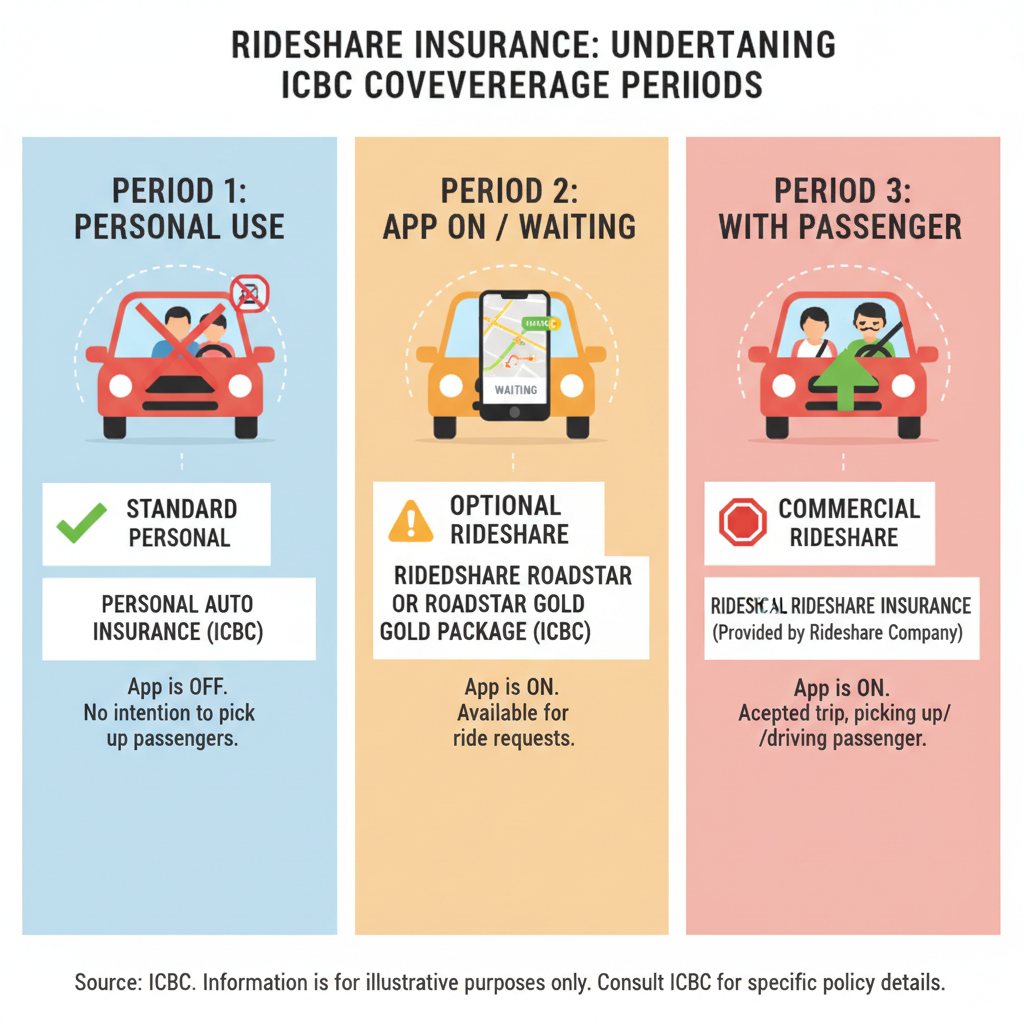
Understanding the Different Periods of Rideshare Operation: A critical aspect of rideshare insurance is recognizing that coverage needs to apply to different phases of operation, as the risk profile changes:
- Personal Use: When the driver is not logged into the rideshare app and is using the vehicle for personal transportation (e.g., commuting, errands), their standard personal vehicle insurance applies.
- App On, Waiting for Request (Period 1): When the driver is logged into the rideshare app and actively waiting for a passenger request, but has not yet accepted one. During this period, the vehicle is available for commercial use, and the risk profile changes from personal use. ICBC’s rideshare insurance products are designed to provide appropriate coverage during this “on-demand” waiting phase, bridging the gap between personal and active commercial use.
- Passenger Accepted/En Route to Pick Up (Period 2): When the driver has accepted a passenger request and is driving to the pick-up location. The commercial aspect is fully engaged here, and comprehensive commercial coverage is required.
- Passenger in Vehicle (Period 3): When the passenger is in the vehicle, from pick-up to drop-off. This is the period of highest risk, involving the direct transport of paying customers, and requires full commercial coverage with adequate liability limits.
ICBC’s rideshare insurance products are designed to seamlessly cover these commercial periods, providing continuous protection. Rideshare companies also carry commercial insurance that may act as a secondary layer of coverage, but the primary responsibility for ensuring the driver’s vehicle is properly insured lies with the driver through ICBC. It is important to note that the rideshare company’s policy often acts as “excess” coverage, meaning it only kicks in after your personal commercial policy limits are exhausted.
Fleet Insurance vs. Individual Driver Insurance
In British Columbia, rideshare drivers typically operate as independent contractors. Therefore, they are responsible for obtaining their individual rideshare insurance through ICBC. The rideshare company (Transportation Network Service or TNS) will have its own overarching commercial fleet insurance, but this usually acts as an excess or contingent policy. This means it typically kicks in only after the driver’s primary ICBC commercial rideshare policy limits are exhausted, or in specific circumstances where the driver’s policy might not apply. It is crucial for drivers to understand that the TNS’s insurance does not absolve them of the responsibility to carry their own specific ICBC rideshare insurance; it is a supplementary layer, not a replacement for your direct obligations as a commercial driver.
Factors Affecting Premiums
The cost of ICBC rideshare commercial insurance can vary based on several factors, reflecting the assessed risk:
- Driving Record: A clean driving record with no at-fault accidents, traffic infractions, or prohibitions will result in lower premiums. Drivers with a history of claims or tickets will pay more, reflecting their higher risk profile. Maintaining a good driving record is therefore financially beneficial.
- Vehicle Type: The make, model, year, value, and safety features of your vehicle will influence collision and comprehensive coverage costs. More expensive or higher-performance vehicles generally cost more to insure due to higher repair or replacement costs. Newer vehicles with advanced safety features might qualify for discounts.
- Location: Where the vehicle is primarily driven and parked (e.g., Vancouver’s dense urban core versus a smaller Okanagan town) can impact rates due to varying traffic densities, accident rates, and theft rates. Urban areas typically face higher premiums.
- Coverage Levels: Choosing higher third-party liability limits (e.g., $2 million instead of $1 million) and lower deductibles for collision/comprehensive coverage will increase premiums but offer greater financial protection in the event of a claim. It’s a balance between cost and risk tolerance.
- Usage: The expected amount of time spent driving for rideshare (e.g., full-time vs. part-time) can also be a factor in some commercial policies, as higher usage generally correlates with higher risk exposure, and thus potentially higher premiums.
Consequences of Non-Compliance
Failure to comply with ICBC’s commercial insurance requirements for rideshare drivers can lead to severe repercussions that extend far beyond financial penalties:
- Invalidation of Claims: As mentioned, personal insurance policies will not cover commercial use, leaving you personally liable for potentially massive damages, medical costs, and legal fees. This can lead to financial ruin, loss of assets, and protracted legal battles.
- Fines and Penalties: Significant fines under the Motor Vehicle Act and Passenger Transportation Act (e.g., hundreds or thousands of dollars) are common. Repeated offenses can lead to even harsher penalties.
- Vehicle Impoundment: Your vehicle can be immediately impounded by law enforcement, incurring towing and storage fees that quickly accumulate, in addition to the inconvenience and loss of earning potential.
- Loss of License: Your driver’s license can be suspended or revoked, impacting your ability to drive both commercially and personally, potentially for an extended period. This can severely affect your livelihood and personal mobility.
- Termination from Rideshare Platform: Rideshare companies strictly require valid insurance and will deactivate drivers who fail to maintain it, resulting in loss of income and inability to pursue rideshare opportunities.
How to Apply and Maintain Coverage
Aspiring rideshare drivers should contact an ICBC Autoplan broker directly. These brokers specialize in helping individuals secure the correct insurance policies, including those for commercial use like rideshare. Drivers will need to provide their Class 4 license information, vehicle details (VIN, make, model), and confirm their intention to drive for a specific rideshare company. It is imperative to clearly inform your broker that you will be using your vehicle for rideshare purposes to ensure you get the appropriate coverage. Regular renewal and maintaining an updated policy (e.g., informing ICBC of any vehicle changes or address changes) are also crucial for continuous compliance. Don’t assume your broker knows your intentions; explicit communication is key.
Beyond ICBC: Additional Requirements and Responsibilities
While ICBC insurance is central, other requirements complement the regulatory framework for rideshare drivers in BC, all designed to enhance safety and professionalism. These ensure a holistic approach to regulating the industry:
- Vehicle Requirements and Safety Inspections: Rideshare vehicles must meet specific safety standards set by the province and undergo regular mechanical inspections (e.g., annual inspections, or more frequently for older vehicles) at designated inspection facilities. These inspections ensure the vehicle is roadworthy, well-maintained, and safe for passengers, covering brakes, tires, lights, steering, and other critical components.
- Criminal Record Checks: All rideshare drivers must undergo a comprehensive criminal record check conducted by the provincial government, in addition to any checks performed by the rideshare company. This rigorous screening ensures passenger safety and builds public trust by verifying that drivers do not have a history of serious criminal offenses. This is a fundamental step in the DoorDash & Uber Eats Driver Registration Canada Guide for many app-based services.
- Driver Abstracts: Regular review of driving abstracts (records of convictions, accidents, and prohibitions) is part of the ongoing monitoring by the Registrar of Passenger Transportation and rideshare companies, ensuring drivers maintain a safe driving record throughout their commercial driving career.
- Vehicle Signage: Rideshare vehicles are typically required to display specific signage or decals provided by the rideshare company, clearly indicating they are operating as a Transportation Network Service vehicle. This helps passengers identify their rides and distinguishes commercial vehicles from private ones.
- Record Keeping: Drivers may need to maintain records related to their vehicle’s maintenance, pre-trip inspections, and potentially hours of operation, although the latter is less stringent than for heavy commercial vehicles. Accurate record-keeping supports safety and compliance.
- Passenger Transportation Licence (PTL) Compliance: While rideshare companies hold the TNS Licence, individual drivers must ensure they operate under the terms and conditions of that license, including adherence to approved fare regulations, operational rules, and passenger handling protocols. This ensures consistency across the rideshare service.
In conclusion, the ICBC commercial insurance requirements for BC rideshare drivers are a comprehensive and non-negotiable part of operating legally and safely. Drivers in Vancouver, Victoria, and the Okanagan must obtain specific ICBC rideshare coverage, understanding how it applies to various operational periods. This ensures financial protection, legal compliance, and, most importantly, the safety and peace of mind for both the driver and their passengers in British Columbia’s distinctive rideshare environment.
The journey to becoming a rideshare driver in British Columbia is characterized by a commitment to elevated standards. From securing the specialized Class 4 license through rigorous knowledge, medical, and road tests, to navigating the unique landscape of ICBC commercial insurance, each step is designed to ensure a professional, safe, and accountable service for the public. These requirements, while demanding, are foundational to the integrity and success of the rideshare industry across the province’s diverse urban and regional landscapes. For aspiring drivers in Vancouver, Victoria, and the Okanagan, understanding and diligently fulfilling these provincial mandates is the key to a rewarding career in rideshare.

Leave a Reply