
Canadian Auto Insurance for Rideshare Drivers: How to Get Approved & Stay Covered

The advent of the gig economy has revolutionized how many Canadians earn income, with ridesharing platforms like Uber and Lyft standing at the forefront of this transformation. What began as a convenient alternative to traditional taxis has blossomed into a primary or supplementary income source for hundreds of thousands across the country. Yet, beneath the veneer of seamless app-driven transactions lies a complex and often misunderstood challenge for drivers: auto insurance. Many aspiring rideshare drivers embark on their journey with significant confusion, particularly when it comes to the critical distinction between personal and commercial auto insurance, and how to properly secure coverage that protects them, their passengers, and their vehicle. This comprehensive guide aims to demystify Canadian auto insurance for rideshare drivers, providing clarity on how to navigate the approval process and ensure you’re adequately protected.
The journey to becoming an approved rideshare driver in Canada isn’t just about passing a background check and having a qualifying vehicle; it’s fundamentally about having the correct insurance. The core of the confusion stems from the hybrid nature of ridesharing: using a personal vehicle for commercial purposes. This blend creates a unique insurance gap that standard personal auto policies are simply not designed to cover, leading to potentially dire consequences for unsuspecting drivers. Understanding the nuances of this insurance landscape is not merely a formality; it is an absolute necessity for anyone looking to legally and safely operate as a rideshare driver in Canada.
The Great Divide: Personal vs. Commercial Auto Insurance
To truly grasp the insurance requirements for ridesharing, it’s essential to first understand the fundamental differences between personal and commercial auto insurance. This distinction forms the bedrock of why specialized rideshare insurance Canada is indispensable.
Personal Auto Insurance
This is the policy most vehicle owners are familiar with. It’s designed to cover your car when you’re using it for personal activities such as commuting to work, running errands, visiting friends, or going on leisure trips. It typically covers a range of scenarios to protect you and your vehicle:
- Third-Party Liability: This is perhaps the most critical component, protecting you financially if you’re found at fault for an accident that causes injury, death, or property damage to other people. Without adequate liability, an at-fault accident could lead to devastating personal financial loss, potentially involving millions in claims. Most provinces mandate a minimum liability coverage, but higher limits are always recommended for personal asset protection.
- Accident Benefits: These provide coverage for medical expenses, rehabilitation, income replacement, and other benefits for you and your passengers, regardless of who is at fault for the accident. The specifics of accident benefits vary significantly by province, reflecting different healthcare and compensation systems and often being legislated by provincial bodies.
- Collision Coverage: This pays for damage to your own vehicle from a collision with another object or vehicle, regardless of fault. It’s often an optional coverage but highly recommended for newer or valuable vehicles, as repair costs can quickly escalate into thousands of dollars.
- Comprehensive Coverage: This protects against non-collision incidents that are beyond your control, such as theft, vandalism, fire, damage from falling objects (like hail or trees), or certain natural disasters. Like collision, it’s usually optional but provides a crucial safety net against unforeseen events that are not related to driving incidents.
The crucial caveat for personal policies is their “for-hire exclusion.” Almost universally, personal auto insurance policies contain clauses that explicitly exclude coverage when the vehicle is used for commercial purposes, particularly for transporting passengers or goods for a fee. These exclusions are not hidden; they are standard language designed to mitigate the increased risk associated with commercial operations. This exclusion is the root of the rideshare insurance dilemma, as it precisely targets the activity a rideshare driver engages in. Any deviation from declared personal use, especially for earning income, fundamentally alters the risk profile the insurer originally assessed.
Commercial Auto Insurance
In contrast, commercial auto insurance is specifically designed for vehicles used in business operations. This extensive category includes a wide array of vehicles, from taxis and delivery vans to construction vehicles and, critically, vehicles used to transport paying passengers. Commercial policies account for the significantly increased risk associated with business use, which inherently involves:
- More time on the road, often during peak traffic hours, consequently increasing exposure to accidents and potential claims.
- Driving in varied conditions, including potentially less familiar routes or areas, and often requiring more frequent stops and starts, increasing wear and tear and accident probability.
- The inherent responsibility of transporting clients or goods, which can increase the financial stakes in the event of an incident, requiring higher liability limits.
A full commercial auto insurance policy would cover all aspects of business use, offering robust protection tailored to the demands of commercial operations. This type of policy explicitly acknowledges the “for-hire” nature of the vehicle’s use. However, for many part-time rideshare drivers, such a comprehensive policy is often considered overkill and can be prohibitively expensive, sometimes costing thousands of dollars more annually than a personal policy. This economic barrier is precisely why specialized rideshare products and endorsements have emerged, attempting to bridge the financial and coverage gap between these two traditional policy types without forcing every rideshare driver into a full commercial policy.
Why Ridesharing Blurs Lines and Creates Gaps
The moment a driver turns on a ridesharing app and signals their availability to pick up passengers, their vehicle’s use transitions from purely personal to commercial. This transition creates distinct “periods” of risk, which standard personal policies simply cannot address. These periods are generally defined as:
- Period 1 (App Off): The driver is using their vehicle for personal purposes. Their personal auto insurance applies fully and exclusively, just as it would for any personal trip, offering protection for general commuting or leisure.
- Period 2 (App On, Awaiting Request): The driver is logged into the rideshare app and actively waiting for a ride request. Their vehicle is now available for commercial use, indicating a clear intent to engage in for-hire activity, but no passenger is yet in the car, nor has a trip been accepted. This is often the most significant insurance “gap,” where the vehicle is no longer used strictly for personal reasons, yet a paying passenger isn’t yet present to trigger the platform’s primary coverage.
- Period 3 (App On, Passenger in Vehicle or En Route to Pick Up): The driver has accepted a ride request and is either on the way to pick up a passenger, or has a passenger in the vehicle. This is unequivocally a commercial activity, as a direct transaction is underway or imminent, and the platform’s commercial policy typically becomes active.
Without specific rideshare insurance Canada coverage or an endorsement, a personal policy will almost certainly deny any claim that arises during Period 2 or 3, leaving the driver entirely uninsured at the time they are most exposed to commercial risk. This gap is not a minor inconvenience; it’s a catastrophic vulnerability that can lead to severe financial and legal repercussions for the driver, potentially costing hundreds of thousands or even millions of dollars in liability.
The Peril of Silence: Why Failing to Inform Your Personal Insurer Can Void Your Policy During Onboarding
One of the gravest mistakes a prospective rideshare driver can make is failing to inform their personal auto insurance provider about their intention to drive for a ridesharing platform. Many drivers, either out of ignorance, confusion, or a misguided attempt to save money, assume that their personal policy will somehow stretch to cover their ridesharing activities, or that the platform’s insurance is sufficient. This assumption is not only incorrect but also incredibly dangerous, leading to potential financial ruin.
The Duty to Disclose
In Canada, insurance contracts are fundamentally based on the principle of uberrimae fidei – “utmost good faith.” This means that both the insurer and the insured have a legal and contractual obligation to act honestly and disclose all material facts relevant to the contract. For policyholders, this translates into a duty to disclose any changes in the use or risk profile of their insured vehicle. Operating a vehicle for commercial purposes, especially for “hire,” represents a significant and material change in risk from the perspective of an insurer.
When you sign up for a personal auto insurance policy, you typically declare that your vehicle will be used for personal, commuting, or pleasure purposes. Introducing ridesharing fundamentally alters this declaration. By not informing your insurer about this change, you are withholding a material fact that directly impacts the insurer’s assessment of risk and the premium they charge. This is not merely a technicality; it strikes at the core of the insurance agreement.
Consequences of Non-Disclosure – A Road to Financial Ruin
The ramifications of failing to disclose ridesharing activities to your personal insurer can be severe and far-reaching, transforming a minor oversight into a life-altering financial burden:
-
Policy Voidance (Retroactive Cancellation): This is the most immediate and devastating consequence. If your insurer discovers you were using your vehicle for ridesharing without disclosing it, they have the right to declare your personal policy void from its inception. This means, legally, it’s as if you never had insurance in the first place, leaving you completely unprotected. This can apply even if the accident occurs during personal use if the undisclosed ridesharing activity was deemed a material misrepresentation at the time the policy was issued or renewed. The implication is that you were never truly insured, invalidating all coverage and potentially leaving you financially exposed for previous incidents as well.
-
Denial of Claims: Any claims you make, whether for an accident that occurred during ridesharing or even a seemingly unrelated personal use accident, can be denied. Imagine a scenario where you’re involved in a fender bender while driving for personal use. If your insurer finds out you’ve been ridesharing without their knowledge, they could deny your claim, leaving you solely responsible for all repair costs, any third-party damages, and medical expenses. This can quickly deplete savings and lead to debt, as you would be responsible for thousands of dollars in damages and potential legal fees.
-
Personal Liability for Damages and Injuries: Without valid insurance, you become personally liable for all damages and injuries resulting from an accident. This could include:
- Repair or replacement costs for your vehicle, which could be thousands of dollars.
- Repair or replacement costs for other vehicles involved, potentially escalating into tens of thousands.
- Medical expenses, long-term rehabilitation costs, and lost wages for injured passengers, other drivers, or pedestrians, which can easily reach hundreds of thousands or even millions of dollars, particularly in cases of severe injury requiring lifelong care.
- Legal fees if you are sued by injured parties or other involved drivers, which can be astronomical and add significant financial strain regardless of the outcome.
These costs can quickly spiral out of control, leading to bankruptcy, garnishment of wages, and the loss of personal assets, including your home, savings, and future earnings.
-
Legal Repercussions and Fraud: Deliberately withholding material information from an insurer can be considered insurance fraud, a serious offense with significant legal penalties. These penalties can include substantial fines, a permanent criminal record, and even potential imprisonment, depending on the severity and jurisdiction. At a minimum, it is a fundamental breach of your insurance contract and may affect your ability to obtain any form of insurance in the future.
-
Difficulty Obtaining Future Insurance: Once an insurer discovers non-disclosure or voids a policy, it will be documented in your insurance history, typically through industry databases accessible to other insurers. This red flag can make it incredibly difficult and significantly more expensive to obtain insurance from any provider in the future, as you will be seen as a high-risk client with a history of non-disclosure. Some insurers may even refuse to cover you at all, making it impossible to legally drive.

The “Onboarding” Trap
Many rideshare drivers fall into this trap during the onboarding process. They might be eager to start earning income, or they might receive incorrect advice from peers or online forums suggesting that their personal insurance is “good enough” or that the platform’s insurance is sufficient. Some might even be under the impression that they can “try it out” for a few weeks before getting proper coverage, believing they can always add it later. This is a perilous gamble. As soon as you log into the app with the intent to accept rides, you are exposed to commercial risk, and your personal policy is likely invalidated for that activity. The risk begins the moment the app is “on” and you are available for a ride, not just when a passenger is in your vehicle.
The message is unequivocally clear: do not proceed with ridesharing activities until you have spoken to your personal insurer and/or secured appropriate rideshare-friendly insurance that explicitly covers your intentions. Your financial future, your personal assets, and potentially your freedom, depend on it. Transparency is not just a recommendation; it is a legal and financial imperative that cannot be overlooked.
Platform Policies: Understanding How Uber/Lyft’s Blanket Coverage Interacts with Your Personal Auto Policy
Ridesharing platforms like Uber and Lyft do indeed provide insurance coverage for their drivers, often referred to as “blanket policies” or “contingent/primary commercial liability insurance.” However, a common and dangerous misconception is that this coverage is all a driver needs. This is far from the truth. The platform’s insurance is designed to work in conjunction with a driver’s personal auto policy, not replace it, and it typically covers specific, narrowly defined periods of the ridesharing journey. Understanding the specifics of this interaction is critical for any Canadian rideshare driver. For detailed information on Uber’s Canadian insurance, drivers can consult the official Uber Canada – Auto Insurance for Driver-Partners page.
To understand the interaction, we must revisit the three distinct “periods” of ridesharing activity, as defined earlier:
Period 1: App Off / Personal Use
- Scenario: The driver is not logged into the rideshare app or has the app completely turned off. They are driving for purely personal reasons, such as commuting to work, running errands, visiting friends, or going on a leisure trip.
- Coverage: During this period, the driver’s personal auto insurance policy is solely responsible for any incidents, accidents, or damages. The ridesharing platform’s insurance provides no coverage whatsoever during Period 1. This unequivocally underscores the fundamental requirement that drivers must always maintain valid personal auto insurance, regardless of their ridesharing activities. Any lapse in personal coverage means no protection at all during this phase, making you fully liable for any damages or injuries.
Period 2: App On, Awaiting Request
- Scenario: The driver is logged into the rideshare app and has made themselves available to accept a ride request, but has not yet accepted one, and there is no passenger in the vehicle. This period represents the “grey area” or the “gap” in coverage.
- Coverage: This is often the most confusing and vulnerable period for drivers. The platform’s insurance typically provides contingent (or secondary) liability coverage during this phase. This means it may kick in only if the driver’s personal auto insurance denies coverage (which it almost certainly will, due to the explicit “for-hire exclusion”).
- Liability: Platforms usually provide limited liability coverage during this period. For example, this might be $50,000 to $200,000, depending on the province and the specific platform. This coverage is intended to cover damages or injuries to third parties (other drivers, pedestrians, property). It’s crucial to note that this is often significantly lower than the liability limits provided during Period 3 and may not be sufficient for severe accidents, potentially leaving you underinsured for substantial claims.
- Collision/Comprehensive: Critically, the platform’s insurance generally does NOT cover damage to the driver’s own vehicle during Period 2, even if the driver has personal collision/comprehensive coverage on their personal policy. If your personal policy voids coverage during this period, you would be entirely responsible for your vehicle’s damages out-of-pocket, making this a major, uninsured gap for many drivers.
- Interaction with Personal Policy: Your personal insurer will almost certainly deny coverage during Period 2 due to the commercial use exclusion. This is precisely why having a rideshare endorsement on your personal policy is so critical. This specialized endorsement explicitly extends your personal policy to cover this specific gap, ensuring you have continuous coverage for your vehicle and potentially higher liability limits, or at least facilitating the platform’s contingent coverage to apply more smoothly and with less ambiguity. Without it, you are exposed to significant financial risk for damage to your own vehicle and potential liability claims.
Period 3: App On, Passenger in Vehicle (or En Route to Pick Up)
- Scenario: The driver has accepted a ride request and is either actively on the way to pick up the passenger, or has a passenger in the vehicle, en route to the destination.
- Coverage: During this period, the ridesharing platform’s insurance typically provides primary commercial auto insurance coverage. This means it is the first line of defense, and its coverage limits are significantly higher, reflecting the direct commercial activity.
- Liability: Platforms generally offer substantial liability coverage during Period 3, often $1 million or $2 million per incident. This comprehensive coverage is designed to cover injuries, death, or damages to third parties (including passengers, other drivers, pedestrians, and property). This is critical for protecting drivers from the high costs associated with passenger injuries.
- Collision & Comprehensive: If the driver has personal collision and comprehensive coverage on their personal policy, the platform’s policy typically extends to cover damage to the driver’s vehicle during Period 3. However, there’s almost always a significant deductible that the driver is responsible for paying (e.g., $1,000, $2,500, or even higher). This deductible is often much higher than personal policy deductibles and should be a significant consideration for drivers, requiring them to have readily available funds.
- Interaction with Personal Policy: While the platform’s policy is primary during Period 3, it still often requires the driver to maintain an underlying personal auto policy with specific coverage types and limits. If your personal policy is voided due to non-disclosure, it could jeopardize your access to the platform’s Period 3 coverage or severely complicate claims, as the platform’s policy might have clauses that rely on the validity of your underlying personal coverage. It ensures there is a comprehensive safety net.
Crucial Takeaways Regarding Platform Insurance:
- It’s NOT a Standalone Solution: Platform insurance is designed to supplement, not replace, your personal auto insurance. It assumes you have a valid, compliant personal policy in place that acts as the foundation of your coverage.
- Gap Coverage is Essential: The primary vulnerability for drivers is during Period 2 (app on, awaiting request). Without a rideshare-friendly personal policy or endorsement, you are highly likely to be uninsured for damage to your own vehicle and potentially for insufficient liability during this critical period.
- High Deductibles: Be prepared for substantial deductibles on platform-provided collision/comprehensive coverage during Period 3. This means you need to have readily available funds to cover this amount in case of an accident where your vehicle is damaged.
- Limits and Exclusions: Like all insurance policies, platform policies have specific limits, conditions, and exclusions. Drivers must review the details provided by Uber, Lyft, or other platforms in their specific province. These details are usually available on the platforms’ websites or through their driver support resources. Ignorance of these terms is not an excuse and can lead to costly surprises.
In essence, relying solely on platform insurance is a risky strategy. It provides crucial liability protection when transporting passengers but leaves significant gaps, especially concerning damage to your own vehicle during the “awaiting request” phase, and does not negate the need for a compliant personal policy. For full protection, drivers must actively secure their own rideshare-specific coverage.
Canadian Insurance Companies That Get It: Rideshare-Friendly Options
Recognizing the growing market of rideshare drivers and the limitations of traditional policies, several Canadian auto insurance companies have proactively developed specific products or endorsements to address the unique needs of the gig economy. These solutions allow drivers to stay compliant with provincial regulations, protect their assets, and most importantly, avoid the devastating consequences of being uninsured. It’s vital to remember that offerings can vary significantly by province, and even by city, so drivers must always confirm availability and specific terms directly with the insurer or a qualified broker.
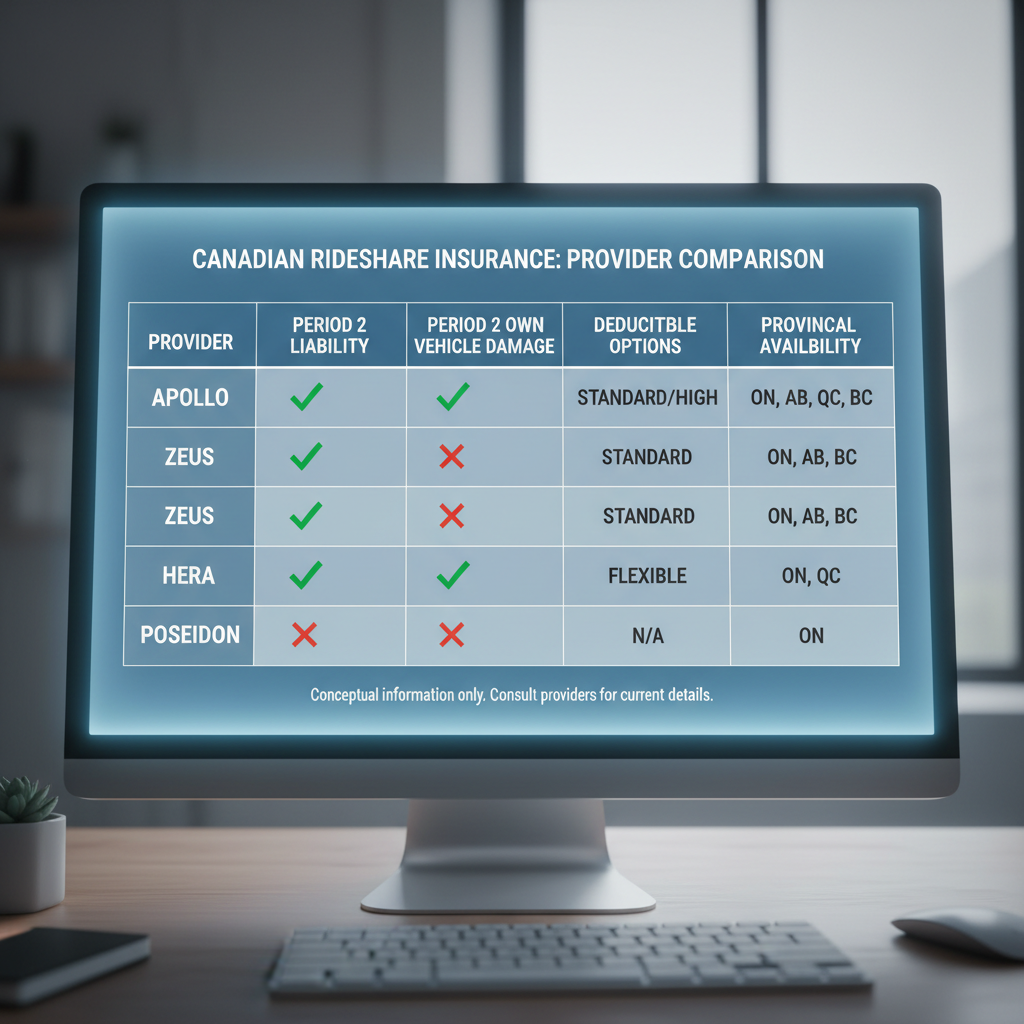
Overview of Rideshare Insurance Solutions:
- Rideshare Endorsements/Riders: These are typically add-ons or amendments to an existing personal auto insurance policy. They function by extending certain personal coverages (like liability and physical damage to your vehicle) to cover the “gap” periods, specifically Period 2 (app on, awaiting request), where traditional personal policies would exclude coverage. They can also clarify how personal coverage interacts with platform coverage during Period 3, potentially reducing your deductible. This is often the most common and, for part-time drivers, most cost-effective solution, as it leverages an existing personal policy while adding the necessary commercial component.
- Hybrid Policies: Some progressive insurers offer specific, standalone policies that are designed from the ground up for rideshare drivers. These policies blend personal and commercial coverage into a single product, aiming for seamless protection across all three ridesharing periods without the need for separate endorsements or complex interactions between policies. They offer a comprehensive solution tailored to the unique hybrid use of the vehicle, providing a unified approach to coverage.
- Full Commercial Policies: While an option, a full commercial policy is usually an over-complication and much more expensive for drivers who primarily rideshare part-time or occasionally. It’s more suited for dedicated taxi services, full-time professional drivers, or fleet operators, where the vehicle is exclusively used for commercial purposes and never for personal use. For most rideshare drivers, this level of coverage is financially impractical and unnecessary.
Key Players and Their Offerings (Examples):
-
Aviva Canada:
- Aviva was one of the first major insurers in Canada to introduce a dedicated rideshare insurance solution, demonstrating a forward-thinking approach to the evolving market. Their solution typically involves an endorsement that seamlessly integrates with a driver’s personal auto policy.
- Product Example (historically): Aviva’s RideSharing Insurance was designed to explicitly cover the Period 2 gap (app on, awaiting request) for both liability and physical damage to the driver’s vehicle. It also provided clarity on how personal coverage interacts with platform coverage during Period 3, often allowing for a reduced deductible on the driver’s own vehicle damage, making claims more manageable. Their offering typically aimed to ensure continuous coverage, from personal use to active ridesharing, without gaps.
- Availability: Aviva’s rideshare solutions are widely available in provinces where ridesharing is regulated, such as Ontario, Alberta, and Quebec. Drivers should always confirm the specific product name, coverage details, and current provincial availability with an Aviva broker or agent, as offerings can change.
-
Intact Insurance:
- Another leading Canadian insurer, Intact, also offers specialized solutions for rideshare drivers, often through an endorsement-based approach that complements existing personal policies. Intact’s commitment to adapting to market needs has made them a significant player in this space.
- Product Example: Intact has consistently offered specific rideshare endorsements that bridge the gap between personal insurance and the ridesharing platform’s coverage. These endorsements often provide increased liability limits and collision/comprehensive coverage during the various rideshare periods, ensuring that the driver is always protected. They might also aim to clarify and potentially lower the deductible structure compared to platform-provided collision coverage, making it more manageable for drivers in case of a claim. Intact’s solutions are often designed to be comprehensive and straightforward for drivers to understand.
- Availability: Similar to Aviva, Intact’s rideshare products are available in key provinces with regulated ridesharing markets. Drivers should contact Intact directly or an Intact broker for the most current information, as product details can vary by region.
-
Belairdirect:
- Known for its direct-to-consumer model and strong online presence, Belairdirect, which is part of the Intact Financial Corporation, also provides accessible rideshare insurance options. Their approach often appeals to drivers looking for convenience and competitive online quoting.
- Product Example: Belairdirect has offered specialized coverage for rideshare drivers, typically through a dedicated add-on or a specific policy that covers both personal and rideshare use. Their offerings aim to provide comprehensive protection that complements the platform’s insurance. They often highlight the seamless transition between personal and rideshare use within the same policy framework, simplifying the insurance landscape for drivers. Belairdirect’s products often focus on clarity and ease of understanding for the policyholder.
- Availability: Check Belairdirect’s website or contact them directly for current provincial availability and specific product features, as their offerings can evolve to meet regulatory and market demands.
Other Notable Players & General Trends:
The landscape of rideshare insurance in Canada is dynamic and constantly evolving, with more insurers recognizing the market demand and adapting their offerings. Drivers should also investigate:
- The Co-operators: Have offered rideshare endorsements in certain provinces, providing another option for drivers seeking coverage and often emphasizing cooperative member benefits.
- Desjardins Insurance: Known for their strong presence in Quebec and Ontario, they often have competitive offerings that may include rideshare solutions tailored to their regional markets, especially for Quebec residents.
- Economical Insurance (now Definity): As part of Definity Financial Corporation, Economical has also adapted to the rideshare market with specialized products to meet driver needs, often through brokers.
- Wawanesa Insurance: A long-standing insurer, Wawanesa has also introduced solutions for rideshare drivers in their operating regions, particularly in Western Canada, focusing on personalized service.
- TD Insurance, The Personal: These direct insurers may also have options or partnerships in place, or be able to guide you to their specialized offerings. It’s always worth checking with them, particularly if you already hold other policies with them.
What to Ask For:
When contacting an insurer or broker about Uber insurance or Lyft insurance, it is absolutely essential to be explicit and transparent about your ridesharing intentions. Do not generalize; be specific. Ask these key questions to ensure you receive appropriate and comprehensive coverage:
- “Do you offer an auto insurance product or endorsement specifically for rideshare drivers (Uber/Lyft) in my province/city?”
- “How does this product cover me during Period 2 (app on, awaiting request)? Specifically, I need to know about liability coverage for third parties and physical damage coverage for my own vehicle during this period.”
- “How does it interact with the rideshare platform’s insurance during Period 3 (when I have a passenger or am en route to pick one up)?”
- “What are the exact deductibles for physical damage coverage to my vehicle during each rideshare period (Period 2 and Period 3)?”
- “What are the specific liability limits for each period of rideshare activity, and are they sufficient for commercial operations?”
- “Will my personal driving record or claims history be affected differently when ridesharing compared to personal use, and how will this impact my premiums?”
- “Are there any limitations on the number of hours I can rideshare per week or month under this policy?”
Remember, the overarching goal is to ensure continuous, seamless coverage across all three ridesharing periods, effectively bridging any gap between your personal policy and the platform’s commercial policy. Never assume; always verify directly with the insurance provider, and get all key information in writing to avoid future disputes.
Navigating the Approval Process: Your Action Plan
Securing the correct auto insurance Canada for ridesharing doesn’t have to be a daunting task, but it does require diligence, transparency, and a methodical approach. Follow this comprehensive action plan to navigate the approval process smoothly and ensure you’re adequately covered before you ever accept your first rideshare trip.
Step 1: Thorough Research and Comparison
- Start Local: Begin by researching insurance providers known to operate in your specific Canadian province and region. While major national players like Aviva and Intact have widespread solutions, smaller or regional insurers might also offer competitive rates or specialized products tailored to local markets. Provincial insurance regulators’ websites are excellent resources for understanding local requirements and finding licensed providers.
- Online Search: Utilize specific search terms like “rideshare insurance [your province],” “Uber insurance [your city],” or “Lyft insurance Canada” to identify relevant providers and specialized brokers. Pay attention to reviews and reputations, seeking out insurers with positive feedback from other rideshare drivers.
- Platform Resources: Check the “Driver” or “Help” sections of Uber and Lyft’s websites for your specific region. They often list approved or recommended insurance providers that offer compatible products or provide general guidance on provincial regulations. This can be a good starting point for finding compliant options.
Step 2: Be Transparent – Call Your Current Insurer First
- Inform Them Directly: Even if you plan to switch insurance providers, it’s crucial to inform your current personal auto insurer about your intention to become a rideshare driver. Ask them explicitly if they offer any rideshare endorsements or policies that would cover your specific needs.
- Understand Their Stance: If they don’t offer rideshare insurance, ask them explicitly if your current policy would be voided if you were to engage in ridesharing activities. Most likely, they will confirm it would be, or they might offer to convert your policy to a full commercial one (which is usually too expensive and comprehensive for part-time rideshare). This conversation is not only important for your records but also clarifies your current coverage status and confirms the necessity of seeking specialized insurance.
- Be Prepared to Switch: Do not be surprised or discouraged if your current insurer cannot or will not provide adequate rideshare coverage. This is a common scenario, and you should be fully prepared to switch providers to one that specializes in or offers endorsements for rideshare drivers.
Step 3: Get Multiple Quotes from Rideshare-Friendly Insurers
- Contact Specialists: Reach out to insurance brokers or agents who specialize in rideshare or commercial auto insurance. These professionals often have access to multiple providers and can help you compare various options, explaining the nuances of each policy. They can be invaluable in navigating complex offerings and ensuring you get the best value for your coverage needs.
- Provide Full Details: Be completely honest and thorough about your driving history (tickets, accidents), vehicle details (year, make, model, VIN), and your intended ridesharing activity (e.g., part-time, full-time, which platform(s), anticipated hours). Small details can significantly impact your quote and the suitability of the policy. Withholding information will only harm you in the long run.
- Request Itemized Quotes: Ask for quotes that clearly delineate coverage during each of the three ridesharing periods. Specifically, ensure the quotes detail liability limits, physical damage coverage for your own vehicle, and the exact deductibles for each period. Compare these details meticulously, not just the premium, as the cheapest policy may not offer the most comprehensive protection.
Step 4: Understand the Policy – Read the Fine Print
- Don’t Skim: Insurance policies can be dense and filled with legal jargon, but it’s imperative to read and fully understand the terms and conditions of any rideshare endorsement or policy you purchase. Do not sign anything until you comprehend its implications, as ignorance is no defense in a claim dispute.
- Focus on Key Sections: Pay particular attention to:
- Exclusions: What specific scenarios or activities are not covered? This is where standard personal policies fail for ridesharing.
- Deductibles: What will you have to pay out-of-pocket for a claim? Understand if deductibles differ by rideshare period, as this directly impacts your immediate financial burden in an incident.
- Coverage Limits: What is the maximum payout for various types of claims (e.g., liability, vehicle damage)? Ensure these limits are sufficient for your risk tolerance and the potential costs of serious accidents.
- Reporting Requirements: Are there any specific procedures or timelines for reporting accidents when ridesharing? Compliance is crucial for claims to be processed smoothly and avoid denial.
- Ask Questions: If anything in the policy document is unclear, ambiguous, or raises concerns, do not hesitate to ask your broker or insurer for thorough clarification before committing. Get explanations in writing if possible to have a clear record.
Step 5: Maintain Open Communication with Your Insurer
- Report Changes: Insurance is dynamic. If there are any significant changes to your driving habits (e.g., you start driving for a new platform, increase your rideshare hours significantly), vehicle (e.g., new car, major modifications), or personal circumstances, immediately inform your insurer. Non-disclosure of changes can be as detrimental as non-disclosure at the outset, potentially voiding your policy.
- Annual Review: Make it a habit to review your policy annually with your insurer or broker. This ensures it still meets your current needs, accounts for any changes in your ridesharing activities, and allows you to inquire about any new or improved rideshare products that might have become available in the market.
Step 6: Know Your Deductibles – Both Personal and Platform
- Be acutely aware of the deductibles for physical damage to your vehicle, especially for the platform’s coverage during Period 3. These can be substantial (e.g., $1,000 to $2,500) and need to be factored into your financial planning and emergency fund. You need to be able to cover this amount out of pocket if your vehicle is damaged in a rideshare incident.
Step 7: Keep Comprehensive Records
- Policy Documents: Keep physical and digital copies of all your insurance policy documents, including your rideshare endorsement, proof of coverage, and any amendments, in an easily accessible format.
- Communication Log: Maintain a detailed log of all communications with your insurer, including dates, names of representatives, and summaries of conversations, especially regarding specific coverage questions or changes. This can be invaluable in case of a dispute.
- Platform Insurance Details: Keep printouts or screenshots of the rideshare platform’s insurance details for your specific province. This information can be crucial in the event of an accident to understand what the platform’s policy covers and how it interacts with your personal policy.
Provincial Variations & Regulations
It is critical to underscore that Canadian auto insurance is regulated at the provincial level, meaning there are significant differences in rules, regulations, and available products across the country. What applies in Ontario may not apply in Alberta or Quebec, and vice versa.
- Ontario: Was one of the first provinces to establish a clear regulatory framework for rideshare insurance, largely driven by the Financial Services Regulatory Authority of Ontario (FSRA). This paved the way for insurers to offer specific endorsements that integrate with personal policies, providing a model for other provinces. Drivers in Ontario might also need to acquire a PTC (Private Transportation Company) License in Ontario to operate legally.
- Alberta: Also has a well-defined regulatory approach that allows for and mandates rideshare-specific insurance products, ensuring drivers in the province have access to compliant coverage. Specific requirements such as a Class 4 License, CVIP & Insurance Guide are crucial for drivers in Alberta.
- Quebec: Drivers in Quebec operate under a hybrid public-private insurance system, with the Société de l’assurance automobile du Québec (SAAQ) providing no-fault injury benefits. Rideshare insurance here also involves specific endorsements from private insurers for vehicle damage and liability, complementing the SAAQ’s coverage.
- Other Provinces: Regulations and available products continue to evolve in British Columbia, Manitoba, Saskatchewan, and the Atlantic provinces. Each jurisdiction introduces its own nuances, requirements, and approved insurance solutions, making localized research essential.
Always consult with an insurance professional in your specific province to ensure compliance with local regulations. Provincial insurance regulators’ websites are also excellent resources for up-to-date information and verified providers. Ignorance of provincial law is not a valid defense in the event of an incident.

Common Myths and Misconceptions Debunked
Several persistent myths and dangerous misconceptions circulate among rideshare drivers, leading to dangerous underinsurance and potential financial catastrophe:
- “My personal insurance covers me because it’s just ‘driving’.” FALSE. As established, personal auto policies almost universally contain explicit “for-hire” exclusions. The moment you are driving for compensation, your personal policy is likely invalid for that activity. This is not a gray area; it is a fundamental contractual exclusion that protects insurers from commercial risks they haven’t underwritten.
- “Uber/Lyft’s insurance is all I need because they provide coverage.” FALSE. Platform insurance is supplementary, not standalone. It has significant gaps (most notably during Period 2, when you’re waiting for a request) and relies on you maintaining a valid, compliant personal policy. It’s a layer of protection, not the entire shield. Relying solely on it is a recipe for disaster.
- “I only drive occasionally, so it doesn’t matter as much for me.” FALSE. Even a single rideshare trip without proper coverage can expose you to immense financial risk if an accident occurs. Risk is not determined by the frequency of the activity but by the activity itself. The one time you’re driving could be the one time you have an accident, and the financial consequences will be just as severe as for a full-time driver.
- “My insurance company won’t find out if I don’t tell them.” FALSE. Insurers are highly adept at investigating claims. If an accident occurs while you’re ridesharing (even if you attempt to claim it was personal use), factors like passenger testimony, metadata from the rideshare platform (GPS logs, trip records), vehicle cameras, or even social media posts can easily reveal the truth, leading to voided policies and denied claims. The consequences of attempting to deceive your insurer are severe, potentially involving legal action and fraud charges.
The Cost Factor
There’s no getting around it: rideshare insurance will be more expensive than purely personal auto insurance. This is not an arbitrary cost; it is a direct reflection of the significantly increased risk associated with commercial driving:
- Increased Time on Road: Rideshare drivers typically spend considerably more hours on the road compared to average personal drivers, leading to a higher probability of being involved in an accident due to increased exposure to traffic and various road conditions.
- More Passengers: Transporting paying passengers significantly increases your liability exposure. The stakes are higher when other individuals are in your vehicle, especially in the event of injuries, which can lead to substantial medical and legal claims.
- Urban Driving: Rideshare activity often involves driving in denser urban environments with higher traffic volumes, more complex road conditions, and consequently, higher accident rates compared to suburban or rural driving.
- Peak Hours: Drivers often operate during peak demand times (rush hour, late nights, weekends) which are inherently riskier due to increased traffic congestion, fatigued drivers, or impaired drivers, all contributing to higher accident frequency.
View the added cost of rideshare insurance not as an optional expense, but as a mandatory business cost. It is an investment in protecting yourself, your vehicle, your passengers, and your entire financial future from potentially catastrophic losses. This cost should be factored into your earnings calculations and considered part of your operational overhead.
Tips for Potentially Reducing Costs:
- Maintain a Clean Driving Record: This remains the single biggest factor in determining insurance premiums, whether personal or commercial. A history free of accidents and traffic violations will always yield better rates, as it signifies lower risk to insurers.
- Choose Your Vehicle Wisely: Newer, safer vehicles with advanced safety features (e.g., automatic emergency braking, lane-keeping assist) might qualify for better rates due to lower risk of severe damage or injury in an accident. More economical vehicles often have lower premiums for physical damage coverage.
- Bundle Policies: If your rideshare-friendly insurer offers it, bundling your auto and home insurance policies, or other types of insurance, can sometimes lead to significant discounts across all your coverages, rewarding you for consolidating your business with one provider.
- Increase Deductibles (on personal coverage): While platform deductibles are often fixed, you might be able to adjust the deductibles on the personal use portion of your rideshare policy to lower your premium. However, this means you’ll have higher out-of-pocket costs if you make a claim, so balance premium savings with your emergency fund capacity.
- Shop Around Annually: Insurance rates and offerings change frequently. Don’t be afraid to compare quotes from different rideshare-friendly insurers each year to ensure you’re getting the best possible rate for your coverage. Loyalty doesn’t always pay; smart shopping does. Utilize brokers to help you compare across multiple providers efficiently.
Conclusion
Embarking on a career or part-time venture as a rideshare driver in Canada offers unparalleled flexibility and income opportunities, but it comes with a non-negotiable responsibility: securing appropriate auto insurance. The complexities of navigating personal versus commercial coverage, understanding the limitations of platform policies, and identifying truly rideshare-friendly insurers can initially seem overwhelming. However, neglecting this critical aspect or relying on misinformation can lead to catastrophic financial ruin, leaving drivers exposed to exorbitant costs for damages, injuries, and legal fees.
The key to success and peace of mind in the ridesharing economy lies in transparency and proactive planning. Never assume your personal policy covers ridesharing activity, and never rely solely on the platform’s insurance for comprehensive protection. Instead, be upfront with insurers, diligently research available rideshare endorsements or specialized policies in your province, and always read and understand the fine print of your coverage. Reputable Canadian companies like Aviva, Intact, and Belairdirect have pioneered solutions to bridge the insurance gap, offering clear pathways to compliant and comprehensive coverage for rideshare drivers.
By following a clear action plan, understanding the specific provincial regulations that govern your operations, and debunking common myths surrounding rideshare insurance, aspiring and current drivers can confidently get approved and operate legally and safely. Your vehicle is often your primary tool for earning income; therefore, protecting it, yourself, and your passengers with the right insurance is not just a regulatory requirement—it’s the cornerstone of a responsible, sustainable, and financially secure rideshare career. Do not drive uninsured; protect yourself, your passengers, and your livelihood with the right coverage from day one.

Leave a Reply