
Alberta Rideshare Registration: Class 1, 2, or 4 License & Safety Inspections
The advent of rideshare services has revolutionized urban transportation, offering convenience and flexible income opportunities. However, this modern mode of transport operates within a stringent regulatory framework in Alberta, designed to prioritize public safety, driver accountability, and fair practices. For any individual considering a career as a rideshare driver in the province, understanding and meticulously adhering to these regulations is not merely a suggestion but a legal imperative. This comprehensive guide delves into the essential provincial requirements, specifically focusing on driver licensing (Class 1, 2, or 4), mandatory annual commercial vehicle inspections, and the critical insurance endorsements (1-6 or 1-5) necessary for legal and safe operation.
The Regulatory Landscape of Ridesharing in Alberta
Ridesharing, facilitated by Transportation Network Companies (TNCs) such as Uber and Lyft, falls under the regulatory purview of Alberta Transportation. The provincial government, primarily through the Traffic Safety Act and its associated regulations, establishes the foundational requirements for drivers, vehicles, and insurance. This provincial oversight is complemented by municipal bylaws, which can introduce additional localized requirements, creating a comprehensive, multi-layered regulatory environment. Understanding these nuances is key, much like learning how to get your PTC license in Ontario: Uber & Lyft Driver Guide for operating rideshare services there. The overarching goal of this structure is to ensure that all drivers providing services for hire meet high standards of safety, competence, and reliability. The Traffic Safety Act, which you can view on the Alberta Queen’s Printer website, serves as the bedrock, defining the rules of the road and the conditions under which vehicles can be operated, with specific clauses addressing commercial activities to enhance public protection.
A rideshare driver, in this context, is an individual who uses their personal vehicle to transport passengers for compensation through a TNC’s digital platform. This commercial use distinguishes it significantly from private vehicle operation, triggering a host of specialized requirements not applicable to typical personal driving. The regulations aim to bridge the gap between private vehicle use and traditional commercial passenger transport, ensuring that the convenience and accessibility of ridesharing do not compromise established public safety standards. This distinction is crucial, as it fundamentally alters the risk profile and necessitates a more rigorous oversight framework for vehicles and drivers engaged in compensated passenger transport. The provincial framework provides the essential blueprint for safe operations, but municipalities often refine these requirements to suit local conditions, addressing issues such as traffic congestion, local licensing, and specific vehicle standards, thereby creating a tightly controlled ecosystem for rideshare services. Drivers are thus accountable to both provincial statutes and local ordinances, demanding a thorough understanding of their operational environment.
Driver Licensing Requirements: The Class 4 Commercial License and its Equivalents
One of the most critical foundational requirements for any rideshare driver in Alberta is possessing the correct class of driver’s license. Unlike driving a personal vehicle, transporting passengers for hire necessitates a commercial license, primarily the Class 4. This requirement underscores the elevated responsibility and professional standards expected of drivers who transport members of the public for a fee. The provincial government recognizes the inherent risks associated with professional passenger transport and has therefore implemented a licensing system that goes beyond the basic qualifications for personal vehicle operation, ensuring an enhanced level of driver competence and public safety.
The Crucial Class 4 Commercial License
A Class 4 driver’s license in Alberta is specifically designated for operating taxis, limousines, rideshare vehicles, ambulances, and other small passenger vehicles (e.g., vans or buses designed for fewer than 25 passengers, including the driver) for hire. This requirement is consistent with professional standards seen in other provinces, such as the detailed requirements for driving rideshare in BC with a Class 4 license and ICBC requirements. Its existence underscores the heightened responsibility associated with transporting members of the public, who place their trust and safety in the driver. This class of license ensures that drivers have demonstrated a superior level of driving proficiency, a thorough knowledge of commercial driving regulations, and a clean personal history, minimizing risks to passengers. The examination process for a Class 4 license is designed to rigorously assess a driver’s ability to handle demanding driving situations, understand passenger management, and comply with all applicable commercial road safety rules. The emphasis is not just on driving skills but also on a driver’s judgment, responsibility, and ability to react appropriately in diverse situations while carrying passengers.
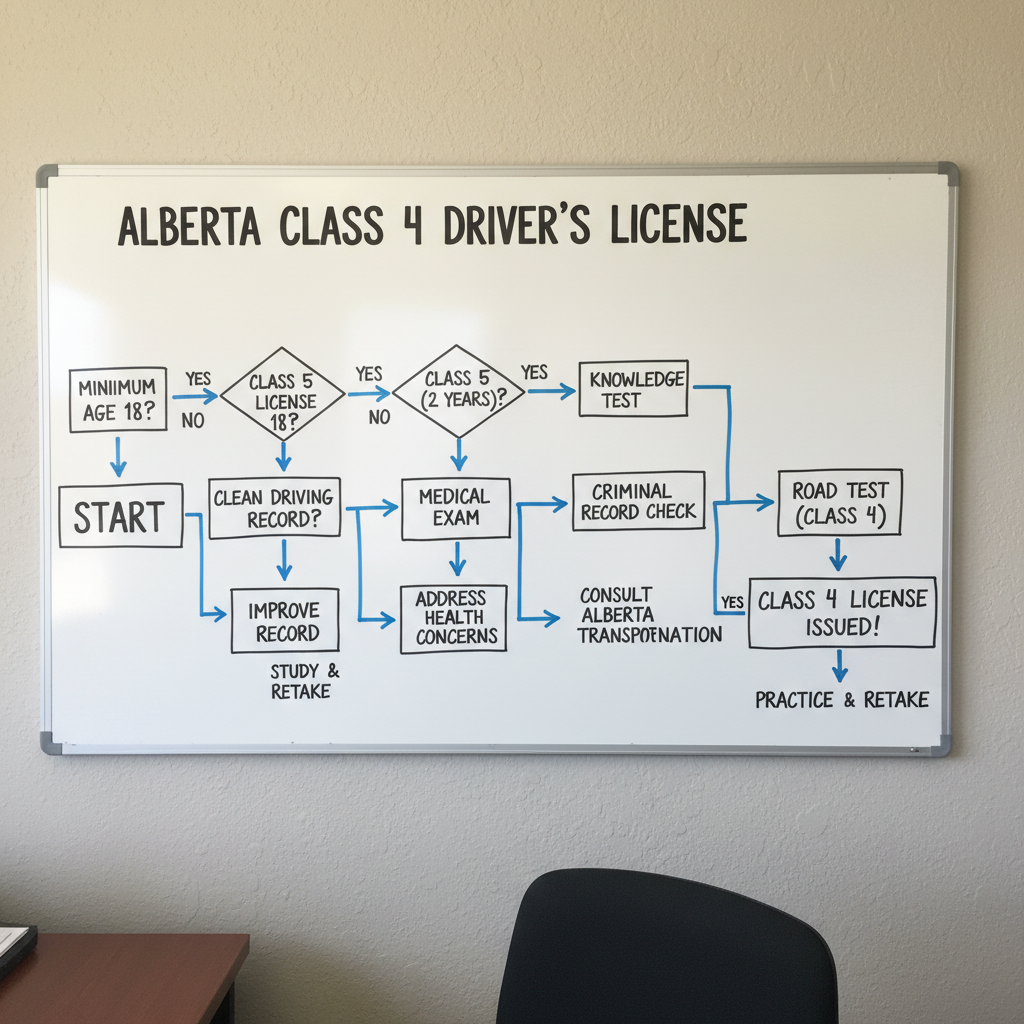
To obtain a Class 4 driver’s license in Alberta, applicants must meet several rigorous prerequisites:
-
Minimum Age and Driving Experience: Applicants must be at least 18 years old. They must also have held a valid Class 5 (non-GDL, i.e., not a probationary or learner’s license) Alberta driver’s license for a minimum specified period, typically two years. This requirement ensures that candidates possess a foundational level of consistent driving experience and maturity without a history of severe infractions, which is critical before undertaking commercial driving responsibilities. The rationale behind this age and experience threshold is to ensure that prospective commercial drivers have accumulated sufficient on-road experience in varied conditions and demonstrated a sustained capacity for responsible driving, moving beyond the novice stages of driving.
-
Clean Driving Record: A stellar driving record is paramount for Class 4 applicants. Individuals are meticulously scrutinized for demerit points, suspensions, or any history of dangerous driving offenses, including distracted driving, speeding, or impaired driving. While specific thresholds can vary, a generally clean record is expected, reflecting a sustained commitment to safe and responsible driving practices over an extended period. Any significant infractions such as multiple speeding tickets, convictions for reckless driving, or any period of license suspension within a specified timeframe can disqualify an applicant. This stringent requirement highlights the importance of ongoing adherence to traffic laws, as any lapse can have direct implications for public safety when operating a commercial vehicle.
-
Medical Examination (Form AB-DL-100): This is a mandatory and recurring requirement that ensures drivers are physically and mentally fit to operate a commercial vehicle safely. Drivers must undergo a thorough medical examination conducted by a licensed physician. The “Medical Examination for Motor Vehicle Operators” form (AB-DL-100) assesses general physical health, vision (including acuity, peripheral vision, and colour perception, which are vital for hazard detection and interpreting traffic signals), hearing (essential for responding to vehicle sounds, emergency sirens, and road conditions), and cognitive functions (critical for judgment, decision-making, and reaction time under pressure). It specifically aims to identify any medical conditions (e.g., uncontrolled heart conditions, severe diabetes that could lead to sudden incapacitation, neurological disorders like epilepsy, untreated severe sleep apnea, or certain psychological conditions that impair judgment) that could impair a driver’s ability to safely operate a commercial vehicle or pose a sudden risk behind the wheel. Drivers must be transparent about all medical conditions, as failure to disclose can lead to license suspension or revocation and can have severe legal and financial consequences in the event of an incident. Periodic medical reviews are required to maintain the Class 4 license, typically every five years for those under 45, every two years for those 45-65, and annually for those over 65, or more frequently if a medical condition warrants closer monitoring. This ongoing medical assessment ensures long-term fitness for duty and is detailed further on the Alberta.ca website for medical examinations for commercial drivers. The rigorous nature of this medical evaluation reflects the elevated responsibility of transporting passengers.
-
Commercial Driver’s Knowledge Test: Candidates must successfully pass a written knowledge test specifically focusing on commercial driving rules, regulations, and safe practices unique to transporting passengers for hire. This includes a deep understanding of passenger safety protocols (e.g., safe loading/unloading, child seat regulations), daily vehicle maintenance checks (pre-trip inspections), defensive driving techniques tailored to urban and commercial environments, and specific regulations governing the operation of vehicles carrying people for compensation. The test covers aspects such as hours of service, hazardous goods awareness (even for passenger vehicles, as incidents can occur), and managing passenger interactions safely. The test ensures drivers possess the theoretical knowledge required for professional operation, equipping them with the information necessary to anticipate and mitigate risks.
-
Road Test (If Applicable): While not always a separate, dedicated road test for Class 4 if one already holds a Class 5, a practical road test may be required if the examiner deems it necessary, or if the driver has limited experience operating passenger-for-hire vehicles. The existing Class 5 road test validates general driving proficiency; however, the Class 4 assessment further emphasizes commercial aspects such as safe loading and unloading of passengers, navigating congested areas, demonstrating smooth, professional driving habits suitable for public transport, and potentially specific maneuvers required for commercial service. The focus is on demonstrating competency under conditions relevant to commercial passenger service, ensuring the driver can consistently provide a safe and comfortable ride.
-
Criminal Record Check (Police Information Check and Vulnerable Sector Check): This is a non-negotiable and highly critical requirement due to the nature of transporting vulnerable individuals, which often involves private interactions. Alberta Transportation mandates a comprehensive Police Information Check, which includes a Criminal Record Check to identify past criminal convictions, and typically a Vulnerable Sector Check (VSC). The VSC is crucial as it specifically searches for pardoned sexual offenses and other convictions where a person has been found to have abused a position of trust or authority over a child or vulnerable person. The results must meet Alberta Transportation’s stringent criteria, ensuring that drivers do not have a history of offenses that would pose a risk to passengers or compromise public trust. This check is typically conducted by municipal police forces or the RCMP and must be renewed periodically (e.g., annually or bi-annually, depending on municipal bylaws) to ensure ongoing suitability. This deep background check is paramount to safeguarding passengers and maintaining the integrity of the rideshare service.
The application process generally involves obtaining the medical form, having it completed and signed by a doctor, passing the knowledge test at a registry agent, and then submitting all necessary documentation, including the criminal record check results, to apply for the Class 4 endorsement. Each step is designed to screen applicants thoroughly, creating a robust gatekeeping mechanism for commercial driver qualifications.
Class 1 and Class 2 Licenses: Beyond Rideshare, but Applicable
It is important to clarify that while a Class 4 license is the minimum requirement for rideshare drivers, individuals holding a Class 1 or Class 2 license are also inherently qualified. This is because Class 1 (for tractor-trailers and other large commercial vehicles) and Class 2 (for buses designed for 25 or more passengers, including the driver) licenses encompass and exceed the qualifications for operating smaller commercial passenger vehicles. A driver holding a Class 1 or 2 license has already demonstrated a significantly higher level of commercial driving proficiency and undergone even more stringent medical assessments and advanced testing requirements, including complex vehicle maneuvering, air brake endorsements, and safety procedures applicable to much larger and heavier vehicles. Therefore, if a rideshare driver already possesses a Class 1 or Class 2 license, they are automatically deemed to meet the passenger-for-hire licensing requirement without needing a separate Class 4 endorsement. The phrasing “Class 1, 2, or 4” in the context of rideshare implies that any of these three licenses will fulfill the provincial requirement for transporting passengers for compensation, with the Class 4 being the most direct and common pathway for rideshare, as it specifically targets small passenger vehicles for hire.
The Importance of a Clean Driving Record and Background Check
Beyond the initial application, maintaining a clean driving record and adhering to ethical conduct is an ongoing expectation for rideshare drivers. Transportation Network Companies (TNCs) frequently conduct periodic background checks and continuously monitor driver performance, which includes reviewing safety incidents, customer feedback, and any new driving infractions. These ongoing checks are not merely bureaucratic hurdles; they are fundamental to maintaining the safety and reputation of the entire rideshare ecosystem. Any new criminal offenses, significant traffic violations (e.g., habitual speeding, distracted driving convictions), or dangerous driving incidents that occur after a license is issued can lead to the immediate suspension or revocation of a commercial license. Furthermore, TNCs have strict policies that will result in permanent removal from their platforms for drivers who fail these ongoing background checks or accumulate a poor performance record. The stringent nature of these ongoing checks underscores the industry’s unwavering commitment to passenger safety and the high level of trust placed in drivers, ensuring that the privilege of transporting the public is only granted to those who consistently demonstrate responsibility and uphold the highest standards of conduct. Drivers are not just evaluated once; their suitability is continuously assessed to protect the public.
Vehicle Safety: Mandatory Commercial Vehicle Inspections
The safety of the vehicle itself is as critical as the driver’s qualifications. Given the higher mileage, increased wear and tear, and the public nature of rideshare operations, Alberta Transportation mandates regular, comprehensive vehicle inspections to ensure mechanical fitness. This proactive measure is essential for preventing accidents caused by equipment failure and upholding public trust, solidifying the commitment to passenger safety from the vehicle’s perspective.
Why Annual Inspections?
Rideshare vehicles operate much more frequently and cover significantly greater distances than typical private vehicles, sometimes accumulating tens of thousands of kilometers annually. This intensive use accelerates wear on critical components such as braking systems, tires, suspension systems, and steering mechanisms, subjecting them to stresses far beyond those experienced by a personal commuter vehicle. Mandatory annual inspections serve several vital purposes:
- Public Safety: The primary objective is to prevent accidents caused by mechanical failure. Passengers have a fundamental right to expect that the vehicle they are entering is safe, mechanically sound, and well-maintained. These inspections act as a critical safeguard against equipment malfunction on the road, which could have catastrophic consequences for occupants and other road users.
- Regulatory Compliance: It ensures that all vehicles operating for hire meet or exceed minimum provincial safety standards established under the Traffic Safety Act, thereby standardizing safety across the rideshare fleet. This standardization creates a predictable and reliable baseline for vehicle condition, ensuring all rideshare vehicles adhere to a uniform safety code.
- Preventative Maintenance: Regular inspections help identify minor issues and potential component failures before they escalate into critical, costly, and dangerous breakdowns. For instance, a worn brake pad or a leaking shock absorber caught during an inspection can be rectified before it leads to a complete brake failure or loss of vehicle control. This proactive approach leads to safer operations, reduced downtime for repairs, and potentially lower long-term maintenance costs for drivers by addressing problems early.
- Driver Accountability: It places a clear and non-negotiable responsibility on the driver/owner to maintain their vehicle in a safe, roadworthy condition at all times, fostering a culture of safety and professionalism within the rideshare community. This ensures that drivers actively manage their vehicle’s condition, rather than passively waiting for problems to emerge.
The Commercial Vehicle Inspection Program (CVIP)
Rideshare vehicles, despite often being standard passenger cars, are classified as “commercial vehicles” for inspection purposes in Alberta due to their use in transporting passengers for hire. As such, they are subject to the provincial Commercial Vehicle Inspection Program (CVIP), which is a comprehensive safety check. More details on this program can be found on the Alberta Transportation website.
-
Frequency: Rideshare vehicles are subject to a mandatory annual CVIP inspection. This means that at least once every 12 months, the vehicle must undergo a thorough safety check performed by authorized personnel. It’s important to note that some municipalities may impose more frequent inspections, such as semi-annually, as part of their local Private Transportation Provider (PTP) licensing requirements. In such cases, drivers must comply with the strictest applicable requirement to maintain their operating privileges, as local bylaws often supersede or enhance provincial minimums.
-
Who Conducts Them? CVIP inspections must be performed by licensed inspection facilities that are specifically authorized and certified by Alberta Transportation. These facilities employ certified journeyman technicians who have specialized training, expertise, and certification to conduct commercial vehicle inspections strictly according to provincial standards and detailed inspection manuals. This ensures consistency and high quality in the assessment process, as these technicians are specifically trained to identify safety-critical deficiencies in commercial vehicles.
-
What Does the Inspection Cover? The CVIP is a highly comprehensive inspection, covering a wide array of vehicle components to ensure operational safety and reliability. Unlike a basic provincial out-of-province or salvage inspection, the CVIP is designed to meticulously scrutinize components under the heavy demands of commercial operation. Key areas inspected include, but are not limited to:
- Braking System: A thorough examination of service brakes (pads, rotors, calipers, hydraulic lines, master cylinder, and anti-lock braking system components), parking brake functionality, and emergency brake system integrity. Inspectors will look for signs of excessive wear, leaks, cracks, and proper adjustment. Any significant wear, leaks, or malfunctions in these components can lead to immediate inspection failure, as brake efficiency is paramount to safety.
- Steering System: Checks on the steering wheel free play, steering column integrity, all linkage components (e.g., tie rods, pitman arm, idler arm), power steering pump and hoses, and wheel bearings. Excessive play or looseness in any steering component is a common reason for failure, as it directly impacts vehicle control and responsiveness.
- Suspension System: Assessment of springs (coil, leaf), shock absorbers, struts, control arms, ball joints, bushings, and sway bars. Inspectors look for broken components, excessive wear, and proper functioning. Proper functioning of the suspension is crucial for maintaining vehicle stability, ride control, and consistent tire contact with the road, especially when carrying passengers and their luggage.
- Tires and Wheels: Detailed inspection of tire condition (minimum tread depth, sidewall integrity for bulges, cracks, or cuts), proper inflation levels, wheel condition (checking for cracks, damage, or deformation), and lug nut tightness. Tires must meet minimum tread depth requirements (typically 1.6mm or 2/32 inches) across all major grooves and be free of significant damage that could lead to failure.
- Lighting System: Verification of all exterior and interior lighting components, including headlights (high/low beam functionality, alignment), tail lights, brake lights, turn signals, hazard lights, reverse lights, and license plate lights. All lights must be functional, correctly aimed, free from cracks or obscurities, and of the correct colour and intensity.
- Wipers and Defrosters: Inspection of windshield wipers and the washer fluid system for effective operation, as well as the defroster system, all of which are critical for maintaining clear visibility in various weather conditions. Blades must be in good condition, and fluid reservoirs filled.
- Body and Frame: Assessment of structural integrity, ensuring the absence of significant corrosion, rust, or damage that could compromise safety or the vehicle’s structural soundness. This includes examining the chassis, body mounts, and door pillars. All doors, hood, and trunk must latch securely and operate correctly, including child safety locks where applicable.
- Exhaust System: Condition of the exhaust pipes, muffler, and catalytic converter is checked for leaks, damage, and secure mounting to prevent dangerous exhaust fumes from entering the passenger compartment and to ensure environmental compliance.
- Seatbelts: Verification of the condition and functionality of all seatbelts, including buckles, retractors, and webbing, for all seating positions within the vehicle. All must be in good working order, free from cuts, fraying, or twists, and retract properly.
- Fuel System: Inspection of fuel lines, tank, and caps for leaks, damage, and secure fitting, which could pose a significant fire hazard.
- General Mechanical Fitness: Comprehensive checks for fluid leaks (oil, coolant, transmission fluid, brake fluid), proper horn function, condition of mirrors (interior and exterior for visibility and integrity), and overall operational soundness of the vehicle’s mechanical and electrical systems, including dashboard warning lights.
Upon successful completion of the CVIP, the vehicle is issued a CVIP certificate and often a visible decal that must be displayed, confirming its compliance and roadworthiness. Vehicles that fail the inspection must undergo all necessary repairs identified during the inspection and then pass a re-inspection before they can legally operate as rideshare vehicles. Operating a vehicle with a failed or expired CVIP is strictly prohibited.

Pre-Trip and Post-Trip Inspections (Driver’s Responsibility)
While the annual CVIP is a formal, in-depth requirement, drivers also bear a daily responsibility for their vehicle’s safety. Although not formal CVIPs, performing diligent pre-trip and post-trip inspections is a fundamental best practice for commercial drivers and is often explicitly required by TNCs and municipal regulations. These checks are rapid, visual, and operational verifications designed to catch immediate safety concerns before or after a shift. They typically involve quickly verifying basic functions such as:
* Lights: Confirming all exterior lights (headlights, tail lights, brake lights, turn signals) are working.
* Tires: Checking for obvious damage (cuts, bulges), proper inflation (using a tire gauge when possible), and sufficient tread depth.
* Brakes: Testing brake pedal feel for responsiveness and ensuring no unusual noises.
* Fluid Levels: Quick check of critical fluid levels (oil, washer fluid).
* Wipers/Defrosters: Ensuring they function correctly for clear visibility.
* Mirrors: Adjusting and ensuring they are clean and intact.
* Cleanliness: Ensuring the interior and exterior are presentable and free of debris.
* General Vehicle Condition: Listening for unusual noises, checking for new damage.
This proactive daily approach helps identify minor issues before they escalate into significant safety hazards or mechanical failures, significantly contributing to overall road safety and the reliability of rideshare services. Neglecting these daily checks could lead to avoidable incidents and potential liability.
Consequences of Non-Compliance
Operating a rideshare vehicle without a valid and current CVIP is a serious offense in Alberta, with severe repercussions. Consequences can include significant monetary fines for the driver, which can range into the hundreds or thousands of dollars, orders for immediate vehicle repairs that must be completed before further operation, vehicle impoundment by law enforcement (meaning the driver cannot continue operating until the issue is resolved and the vehicle is released), suspension of the driver’s commercial operating privileges (e.g., their Class 4 license could be suspended), and critically, the potential invalidation of insurance coverage in the event of an accident. If an accident occurs in a non-compliant vehicle, insurance providers may deny claims, leaving the driver personally responsible for all damages and injuries. Furthermore, TNCs will promptly deactivate drivers from their platforms who fail to provide proof of a current and valid vehicle inspection, rendering them unable to operate as rideshare providers and earn income through the platform.
Insurance Endorsements: 1-6 or 1-5 for Rideshare Operations
Insurance is arguably one of the most critical, yet often misunderstood, aspects of rideshare operation. Standard personal auto insurance policies are explicitly designed for private use and typically contain clauses that exclude coverage when a vehicle is used for commercial purposes, especially for carrying passengers for hire. This creates a significant “gap” in coverage during rideshare activities, which Alberta’s specific insurance endorsements aim to address comprehensively, protecting both drivers and passengers. Without the correct insurance, a rideshare driver is exposed to immense financial and legal risks.
The Unique Insurance Needs of Rideshare
The rideshare model creates distinct phases of vehicle use, each with different insurance implications that standard personal policies cannot adequately cover:
- Phase 0: Personal Use. The driver is using the vehicle for purely personal reasons, and the rideshare application is completely off. In this phase, the driver’s personal auto insurance policy covers any incidents as it would for any private vehicle use. This is the only phase where standard personal auto insurance is sufficient.
- Phase 1: App On, Available. The driver has the rideshare app on and is logged in, actively waiting for a ride request. The vehicle is technically “available for hire,” even though no passenger is yet confirmed or picked up. This is a crucial gap where personal insurance would typically not provide coverage, considering the vehicle is no longer exclusively for private use but is engaged in a commercial activity. This “waiting” period was historically a significant point of contention for insurance coverage.
- Phase 2: En Route to Pick Up Passenger. The driver has accepted a ride request and is actively navigating to the designated passenger’s pick-up location. At this point, the vehicle is definitively operating for hire, and the commercial nature of the activity is fully engaged, with an impending passenger interaction.
- Phase 3: Passenger In Vehicle, Ride in Progress. The passenger is in the vehicle, and the ride is actively in progress, transporting them to their destination. This is unequivocally a commercial operation, and adequate commercial insurance is essential, as the driver is directly providing a service for compensation.
Without specialized coverage designed for these commercial phases, drivers could find themselves entirely uninsured during Phases 1, 2, and 3, leading to catastrophic financial liability in the event of an accident, including costs for vehicle damage, injuries to passengers, and third-party claims. This lack of coverage could result in personal bankruptcy, loss of assets, and protracted legal battles.
Endorsement 1-6 (Transportation Network Endorsement)
Endorsement 1-6, often referred to as the “Transportation Network Endorsement” or “Rideshare Endorsement,” was specifically designed and implemented by the insurance industry in conjunction with provincial regulators to address the unique and evolving insurance requirements of TNC operations in Alberta. It is the primary and most appropriate form of coverage for rideshare drivers. This endorsement is a critical piece of legislation that clarifies and formalizes insurance requirements for the dynamic rideshare industry.
-
Purpose: This endorsement is designed to seamlessly extend coverage from a driver’s underlying personal auto insurance policy to specifically cover the unique risks associated with ridesharing during all commercial phases (Phases 1, 2, and 3). It effectively bridges the critical gap between personal use coverage and the commercial coverage that may be provided by the TNC, ensuring continuous protection. By attaching to the personal policy, it ensures the driver’s primary insurer is aware and has underwritten the commercial risk.
-
Coverage Details: Endorsement 1-6 typically provides a robust range of coverage, enhancing the personal policy to include commercial risks:
- Third-Party Liability Coverage: This is paramount, providing protection against claims arising from injuries or damages caused to other individuals or property in an accident where the rideshare driver is at fault. It covers legal defense costs and settlement amounts up to specified limits, typically in the millions of dollars, to protect against severe claims.
- Accident Benefits: This crucial component provides coverage for medical expenses, rehabilitation, and potentially lost wages for the driver and all passengers in the vehicle, regardless of who is at fault for the accident. This is vital for ensuring that all injured parties receive necessary care without immediate financial burden.
- Collision and Comprehensive Coverage: Depending on the driver’s underlying personal policy and the specific terms of the endorsement, this may also extend to cover damage to the driver’s own vehicle during rideshare operations (e.g., collision with another vehicle, vandalism, theft, fire, or other perils), ensuring that the driver’s asset is also protected against commercial use risks. This protects the driver’s investment in their vehicle, which is their primary tool of trade.
-
Mandatory Disclosure: Drivers must inform their personal auto insurer that they intend to operate as a rideshare driver. This disclosure is not optional; failure to communicate this commercial use to their insurer can result in severe repercussions, including the insurer denying claims related to rideshare activities (even personal use claims if misrepresentation is proven), cancelling the policy retroactively (as if it never existed), or refusing to renew coverage. Obtaining Endorsement 1-6 is the proper and legally compliant way to ensure continuous and compliant coverage, preventing critical gaps that could lead to financial ruin. It transforms a personal policy into one that acknowledges and covers the commercial operation.
Endorsement 1-5 (Commercial Use Endorsement)
Prior to the widespread availability and regulatory clarity surrounding Endorsement 1-6, some rideshare drivers or insurers might have utilized a general “Commercial Use Endorsement” (sometimes referred to as a “business use” endorsement), designated as Endorsement 1-5.
-
When it was used: Endorsement 1-5 is designed for broader commercial use cases, such as an individual using their personal vehicle for sales calls, business errands, delivery services where goods are transported, or other general business activities where passengers are not necessarily being carried for hire as the primary function. It acknowledges that the vehicle is used for work, but not specifically for TNC passenger transport. It typically covers risks associated with using a personal vehicle for work-related tasks that do not involve public passenger transport.
-
Distinction from 1-6: While Endorsement 1-5 covers “commercial use,” it is less specifically tailored to the nuanced “phases” of TNC operations than Endorsement 1-6. Endorsement 1-6 was specifically created to precisely match the regulatory intent for TNCs, ensuring specific coverage for the “app-on” waiting period (Phase 1), which was often a significant grey area for general commercial endorsements like 1-5. The specificity of 1-6 directly addresses the unique risk profile of ridesharing, which involves specific contractual arrangements between the driver, passenger, and the TNC.
-
Current Preference: Today, Endorsement 1-6 is unequivocally the standard and strongly preferred option for dedicated rideshare drivers in Alberta. It offers superior clarity and comprehensive coverage directly aligned with provincial regulations and the operational model of TNCs. While a 1-5 endorsement might offer some commercial coverage, it may not be as robust or specifically designed for rideshare as the 1-6, potentially leaving critical gaps in protection, particularly during the crucial “app-on, no passenger” phase. Drivers should always seek the 1-6 endorsement if available from their insurer, and confirm with their insurance provider that it fully covers their intended rideshare activities, explicitly mentioning “transportation network company” operations.
TNC-Provided Insurance vs. Driver’s Endorsement
It is crucial to understand that TNCs (like Uber and Lyft) also provide commercial liability insurance policies for their drivers. However, the driver’s personal policy with the 1-6 endorsement and the TNC’s commercial policy work in conjunction, forming layers of coverage. This layered approach ensures comprehensive protection. Typically, the insurance hierarchy works as follows:
- During Phase 0 (app off, personal use): The driver’s personal auto policy is primary and sole coverage. No TNC insurance applies.
- During Phase 1 (app on, waiting for request): The driver’s personal policy with the 1-6 endorsement typically provides the primary layer of commercial coverage. The TNC’s insurance may provide a contingent or excess layer of liability coverage, often with lower limits, if the driver’s primary policy denies coverage or is insufficient.
- During Phase 2 (en route to pick up passenger): The driver’s personal policy with the 1-6 endorsement continues to act as the primary layer. The TNC’s insurance provides a significant secondary layer of commercial liability coverage, usually with higher limits (e.g., $1 million or more), which comes into effect if the driver’s primary policy limits are exhausted or if the primary policy is not engaged for some reason.
- During Phase 3 (passenger in vehicle, ride in progress): The TNC’s master commercial policy generally becomes the primary layer of coverage, providing substantial commercial liability limits (often $2 million or more per incident). The driver’s 1-6 endorsement provides an underlying layer, and in some models, acts as the first line of defense before the TNC’s substantial policy engages.
This layered system ensures continuous, robust coverage throughout all commercial phases. However, drivers must not rely solely on the TNC’s insurance. Their own 1-6 endorsement is fundamental to ensuring they are fully compliant, adequately protected, and managing their personal financial risk. Failure to have this personal endorsement can lead to significant out-of-pocket expenses and legal liabilities in the event of an accident, even if the TNC’s policy eventually provides some coverage, as the driver’s primary responsibility will likely be assessed. For more information on ridesharing insurance, consult resources like the Insurance Bureau of Canada.
Consequences of Inadequate Insurance
Operating as a rideshare driver without proper insurance endorsements (1-6 or an appropriate 1-5 if 1-6 is not available and explicitly deemed sufficient by the insurer for TNC work) carries severe and potentially life-altering consequences:
- Financial Ruin: In the event of an accident, drivers could be personally liable for significant damages, medical expenses for injured parties (including passengers and third parties), property damage, and legal costs arising from a claim. These amounts can potentially total hundreds of thousands or even millions of dollars, leading to personal bankruptcy and the loss of personal assets such as homes, savings, and future earnings.
- Legal Penalties: Operating a vehicle without valid and appropriate insurance is a serious offense in Alberta, leading to substantial fines (which can be thousands of dollars for a first offense), immediate license suspension, and vehicle impoundment. These legal consequences can severely impact a driver’s ability to drive at all, let alone for commercial purposes.
- TNC Deactivation: All reputable TNC platforms maintain strict requirements for driver insurance. They will promptly deactivate drivers who cannot prove they have current and compliant insurance, effectively ending their ability to earn income through the platform. TNCs cannot afford the legal and reputational risks associated with uninsured drivers.
- Policy Cancellation: Insurers have the right to cancel personal auto policies retroactively if they discover undisclosed commercial use, effectively voiding all claims made under that policy, including those for personal use. This can make obtaining future insurance coverage extremely difficult and expensive, potentially placing the driver in an “uninsurable” category.
Municipal Bylaws and Additional Requirements
While Alberta Transportation sets the provincial baseline for rideshare regulations, municipalities often introduce their own specific bylaws for Private Transportation Providers (PTPs) or TNCs operating within their jurisdictions. These municipal regulations add another layer of requirements, and drivers must comply with both provincial and municipal rules for all areas in which they intend to pick up passengers. It is imperative for drivers to research and understand the local rules for each city they operate in, as non-compliance can lead to local penalties separate from provincial ones. These bylaws reflect local priorities and challenges, such as managing traffic, ensuring local economic fairness, and addressing specific safety concerns unique to dense urban environments.
Common municipal requirements can include:
- Municipal Business License/PTP Driver Permit: Drivers often need a specific permit or business license issued by the city (e.g., City of Calgary PTP Driver’s Licence, City of Edmonton Driver’s Licence) to legally operate a rideshare service within its jurisdiction. This permit confirms local compliance and often requires its own application process, fees, and may include additional local background checks or training.
- Vehicle Age Limits: Some municipalities impose maximum age limits for rideshare vehicles (e.g., vehicles must be less than 10 years old from their model year, or 7 years from date of manufacture for some premium services). These limits are typically stricter than provincial requirements and are designed to ensure vehicle reliability, maintain a modern fleet, and enhance passenger comfort and perception of quality.
- Specific Signage/Decals: Requirements for TNC decals or specific municipal identification (e.g., a city-issued plate or sticker) to be displayed prominently on the vehicle during operation. This helps identify legitimate rideshare vehicles for regulatory purposes, by-law enforcement, and for passenger recognition and safety.
- Additional Inspections: While the annual provincial CVIP is mandatory, some cities may require additional, more frequent safety inspections (e.g., semi-annual or even quarterly inspections) as part of their local PTP licensing. Drivers must adhere to these more stringent local requirements, even if it means undergoing more inspections than the provincial minimum.
- Minimum Vehicle Standards: Specific requirements for vehicle type (e.g., minimum passenger capacity, four-door vehicles only), specific safety equipment (e.g., fire extinguisher, first aid kit), and maintaining a consistently high standard of vehicle cleanliness and presentation for passenger comfort and hygiene. Some municipalities may also have requirements regarding vehicle modifications or aesthetics.
It is the driver’s direct responsibility to research and understand the specific bylaws of Calgary, Edmonton, or any other municipality where they intend to pick up passengers. This due diligence is critical for seamless operation across different city limits. Non-compliance with municipal bylaws can result in fines, suspension of local operating privileges, and can also lead to deactivation from TNC platforms that require adherence to all local regulations, effectively halting a driver’s ability to operate in that specific region.
The Importance of Compliance and Ongoing Due Diligence
The regulatory framework for ridesharing in Alberta is robust and multi-faceted, reflecting a deep-seated commitment to public safety, consumer protection, and equitable transportation services. For rideshare drivers, successfully navigating and adhering to these requirements is paramount to establishing and maintaining a sustainable, legal, and profitable career. It is not a static list of one-time tasks, but an ongoing commitment to regulatory awareness and adherence.
- Ensuring Public Trust and Safety: Every regulation, from the rigorous Class 4 driver licensing requirements to comprehensive annual vehicle inspections and mandatory rideshare-specific insurance, is meticulously designed with the primary goal of protecting the public. Consistent adherence to these standards not only prevents accidents, minimizes risk, and ensures safety but also builds and maintains public trust in the rideshare industry as a safe, reliable, and professional transportation option. When drivers consistently meet these standards, passengers feel more secure, leading to greater acceptance and sustained growth of the rideshare sector.
- Driver Accountability and Professionalism: Compliance is a hallmark of professionalism in any commercial endeavor. For rideshare drivers, it signifies their commitment to operating responsibly and ethically, aligning themselves with provincial and municipal expectations for commercial passenger transport. Adherence protects drivers from severe legal and financial repercussions in the event of an incident and ensures they are operating within the full bounds of the law, fostering a reputable business environment. It also differentiates professional rideshare operators from those who might try to circumvent regulations, upholding the integrity of the service.
- Staying Informed: The regulatory landscape for ridesharing is dynamic and can evolve with legislative changes, new technologies, shifts in public policy, or responses to incidents. Drivers must cultivate a habit of regularly checking official sources, such as the Alberta Transportation website (for updates on commercial licensing and CVIP), municipal websites (for changes to local PTP bylaws), and communications from their respective TNCs, for any updates or changes to requirements. Proactive engagement with regulatory information is key to long-term success and continuous compliance, safeguarding against unexpected penalties or loss of operating privileges due to outdated information. Ignorance of the law is not a valid defense, and keeping abreast of changes is a core responsibility of any commercial operator.
In conclusion, becoming and remaining a rideshare driver in Alberta demands more than just possessing a vehicle and a smartphone. It requires a deep understanding and consistent adherence to provincial and municipal regulations governing driver licensing, vehicle safety, and insurance. Obtaining a Class 4 (or an equivalent Class 1 or 2) license, ensuring mandatory annual commercial vehicle inspections (CVIP) are completed and passed, and securing the appropriate rideshare-specific insurance endorsement (1-6) are non-negotiable and fundamental steps towards operating legally, safely, and successfully in Alberta’s dynamic rideshare market. These comprehensive requirements collectively form the bedrock of a safe, reliable, and trustworthy rideshare ecosystem, ultimately benefiting both diligent drivers and the passengers they serve by creating a secure and professionally managed transportation service.

Leave a Reply